Table of Contents
- 1 1. How to think about Shoji Screens in today’s world
- 2 2. Why Shoji Screens Are a Good Fit for Small Homes
- 3 3. Using Shoji Screens to Separate Rooms Gently
- 4 4. Letting more natural light into the room
- 5 5. Modern Shoji Screens for Modern Homes
- 6 6. Making privacy without shutting yourself in:
- 7 7. Shoji screens in bedrooms and places to sleep
- 8 8. Adding warmth with texture and material
- 9 9. Layouts that can change for everyday use
- 10 10. How to Use Style Shoji Screens For Small Homes
- 11 11. Partitions for small spaces that feel personal
- 12 12. Daily Care and Use Over Time
- 13 FaQs:
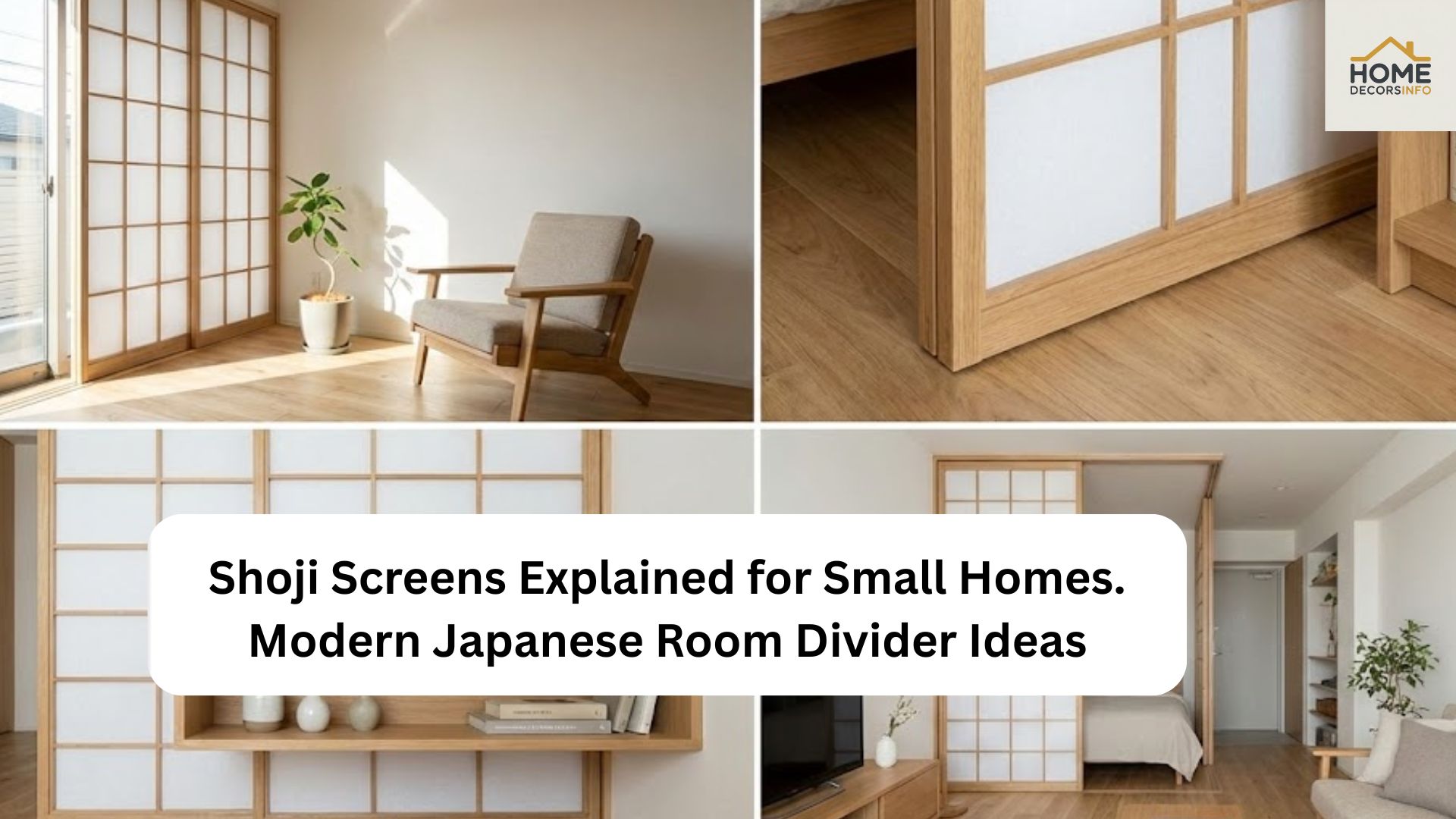
Shoji screens for small homes: It can be hard to figure out how to decorate a small home. You want space and light, but you also need structure and privacy. This is where smart design choices really stand out. One thing that keeps coming up in calm, well-layered rooms is the soft presence of shoji screens for small homes. They don’t feel heavy; they feel soft. They don’t feel fixed; they feel flexible. They give the room a sense of purpose without taking up too much space. This idea can be both comforting and inspiring if you like spaces that feel calm and lived in. In this guide, we’ll talk about how shoji screens can change the way you live in a small home without making a lot of noise. They can make small rooms feel more balanced, brighter, and easier to enjoy.
1. How to think about Shoji Screens in today’s world
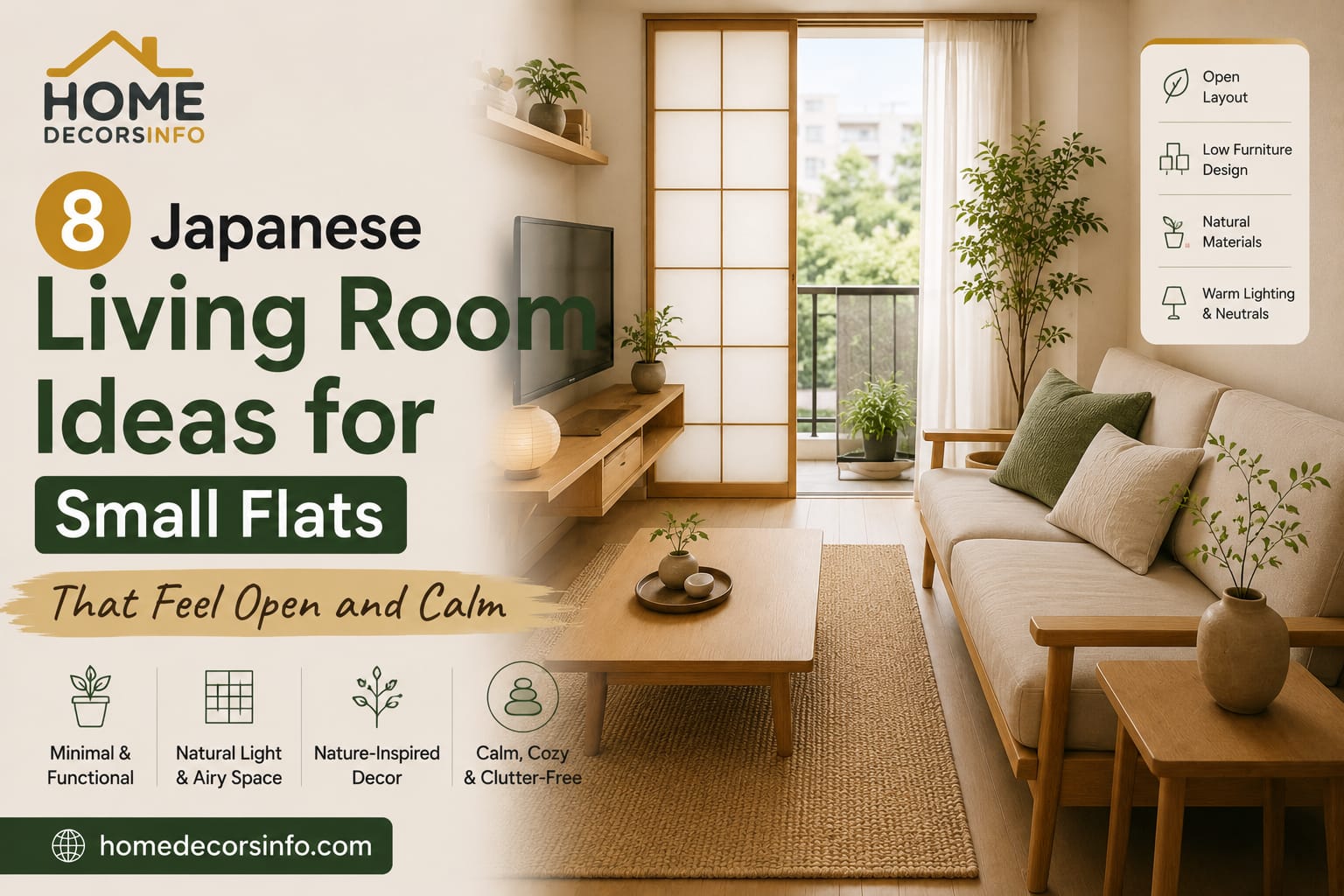
Shoji screens are based on traditional Japanese home design, where rooms flow into each other, and light is used as a design element. Shoji screens are made of wooden frames and see-through paper or fabric panels. They soften sharp edges and let in light. In modern homes, they have become stronger versions of themselves while still being calm. Shoji screens for small homes can help you separate spaces without making them look heavy if you use them wisely.
A lot of people use them today not to completely close off a space, but to shape how a room feels and works. They are great for apartments where the walls seem too permanent. Shoji screens give you the freedom to change the layout of your small home as your needs change, which is nice in small spaces.
2. Why Shoji Screens Are a Good Fit for Small Homes
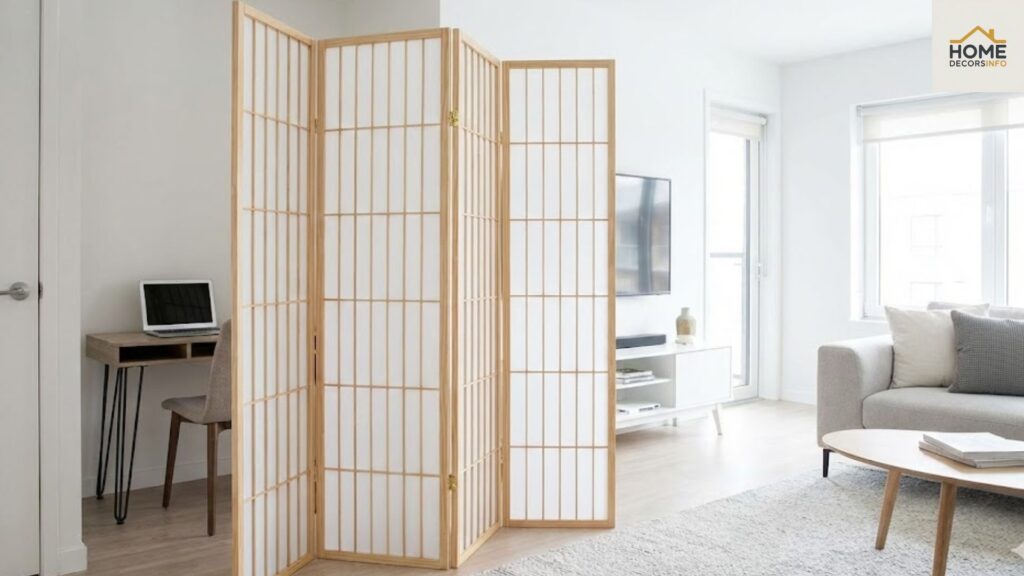
Design features that serve more than one purpose are helpful in small homes. That’s exactly what shoji screens do. They break up the space, spread out the light, and add texture without making the room feel crowded. They let your home breathe visually, which solid walls don’t do. This is why shoji screens for small homes feel so natural and relaxing.
They also go well with ideas for simple room dividers. Their straight lines and light materials keep things simple. Shoji screens for small homes blend in with neutral colors and natural wood, but they still make a quiet statement. They support a way of life that values comfort, clarity, and adaptability.
3. Using Shoji Screens to Separate Rooms Gently
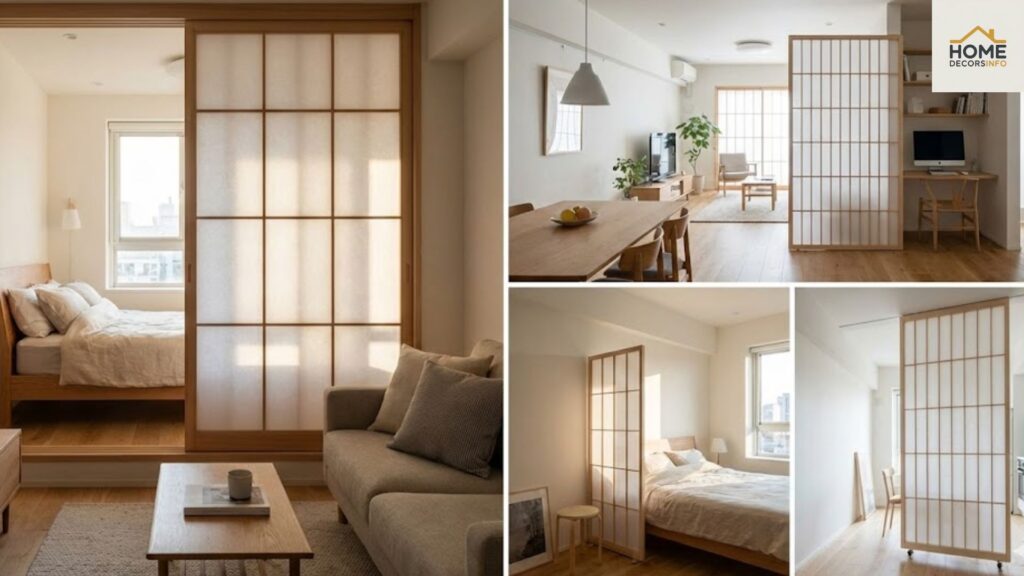
One of the most common uses for shoji screens is to separate rooms in a Japanese style. They help define areas in studio apartments or open-plan layouts without making the space feel smaller. A sleeping area can feel more private while still getting light from windows that are close by.
As soft boundaries, shoji screens for small homes work in this way. They help people move around and make areas, but they never feel strict. This method works well for people who want their home to be tidy but not too formal. Choosing shoji screens for small homes lets your rooms change with the seasons instead of forcing everything into fixed corners.
4. Letting more natural light into the room
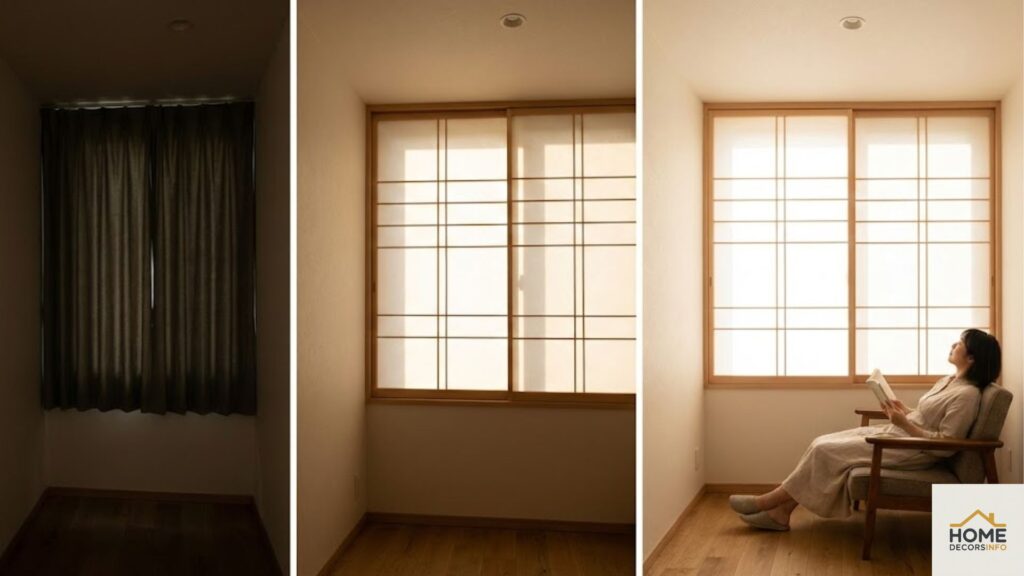
In small spaces, light is very valuable. Thick curtains or solid walls can block it, making rooms feel closed off. Shoji screens fix this problem in a gentle way. Their see-through surfaces let in light while also softening glare. This feature makes shoji screens for small homes especially nice in apartments that are dark.
They help spread light evenly when they are put near windows or between rooms. This makes a soft light that makes rooms feel bigger and more inviting. Many homeowners notice that shoji screens for small homes make things go more slowly over time. The home becomes a place to relax, mornings feel quieter, and evenings feel warmer.
5. Modern Shoji Screens for Modern Homes
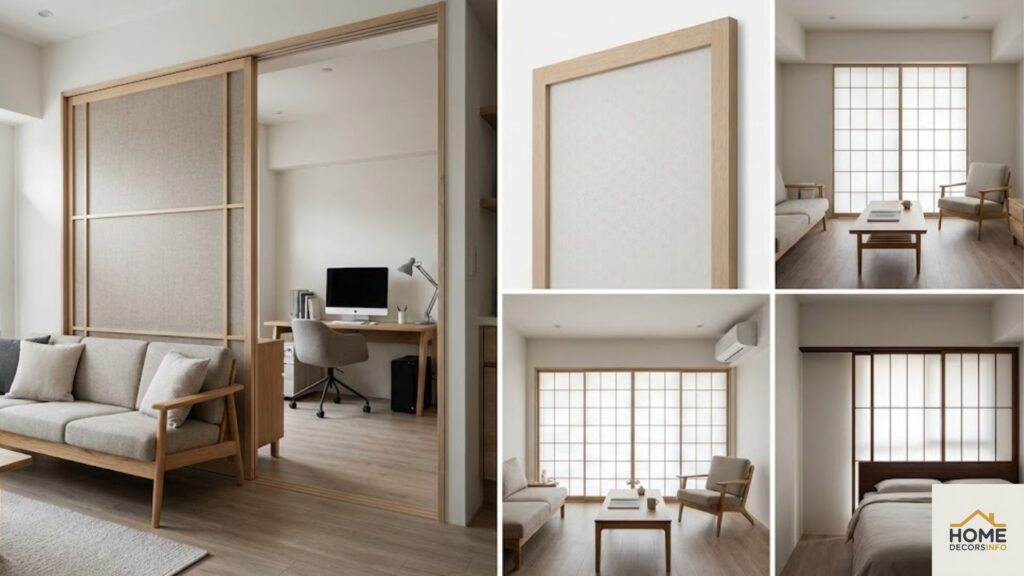
Today’s shoji screens are made to fit the way people live. There are versions with stronger materials, subtle patterns, or sliding panels that fit in with modern homes. These new shoji screens are still true to the old style, but they feel new and useful.
Modern shoji screens for small homes look best when they are used with simple furniture and clean lines. They give character without drawing attention to themselves. This mix works especially well if your home has a Scandinavian or modern Japanese style. The end result is a room that feels planned out, not styled, and is easy to live in.
6. Making privacy without shutting yourself in:
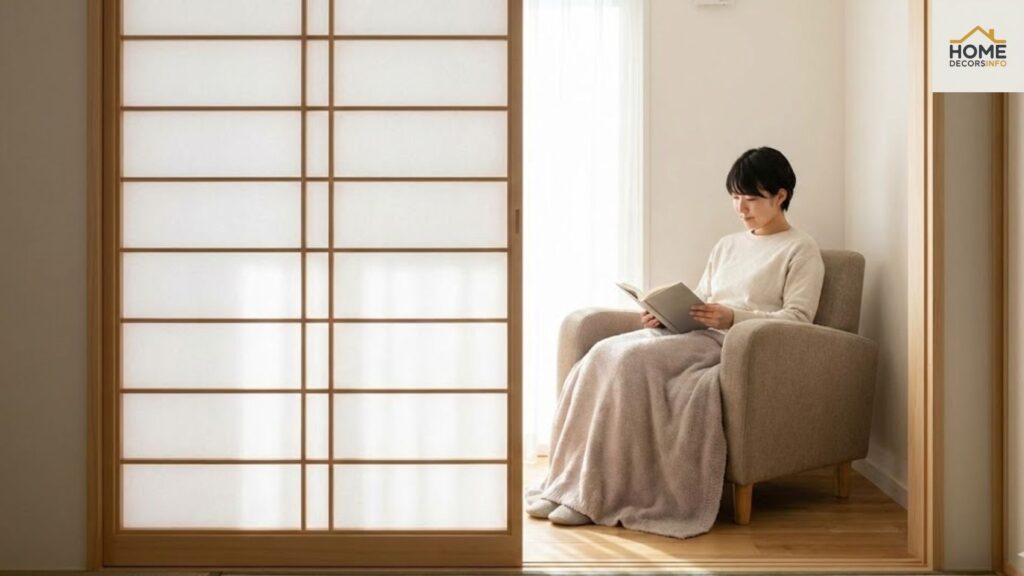
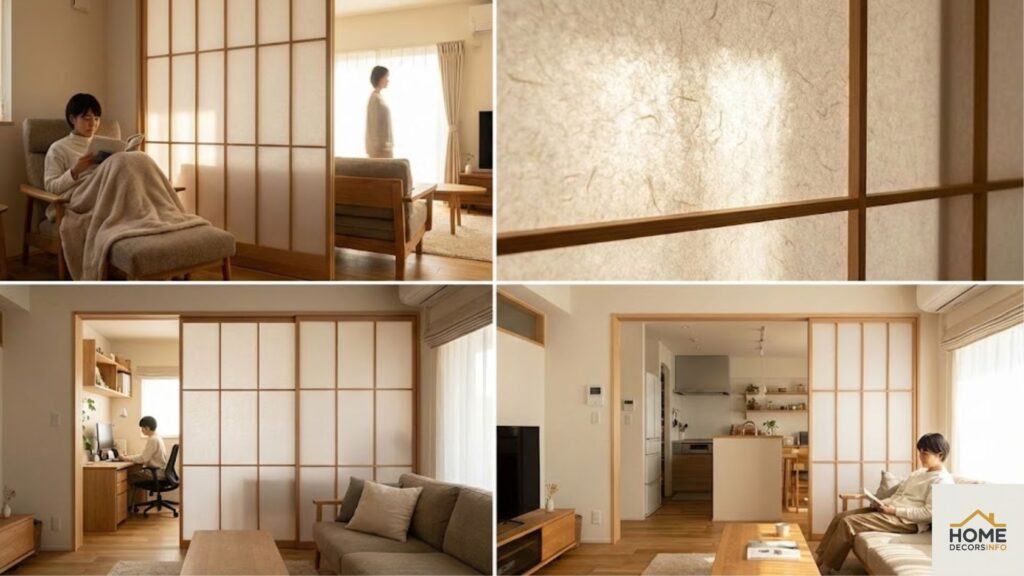
Even in small homes, privacy is important. Shoji screens are a solution that feels more like a hug than a wall. Instead of completely blocking views, they blur outlines. This makes them perfect for places where you want to have private time without closing the door.
This is a good way to use shoji screens in small homes to help with emotional comfort. You can read, relax, or work and still feel like you’re part of the rest of the house. Japanese home design is all about finding this balance, where rooms change depending on the time of day and mood. Shoji screens for small homes make privacy feel soft and planned.
7. Shoji screens in bedrooms and places to sleep
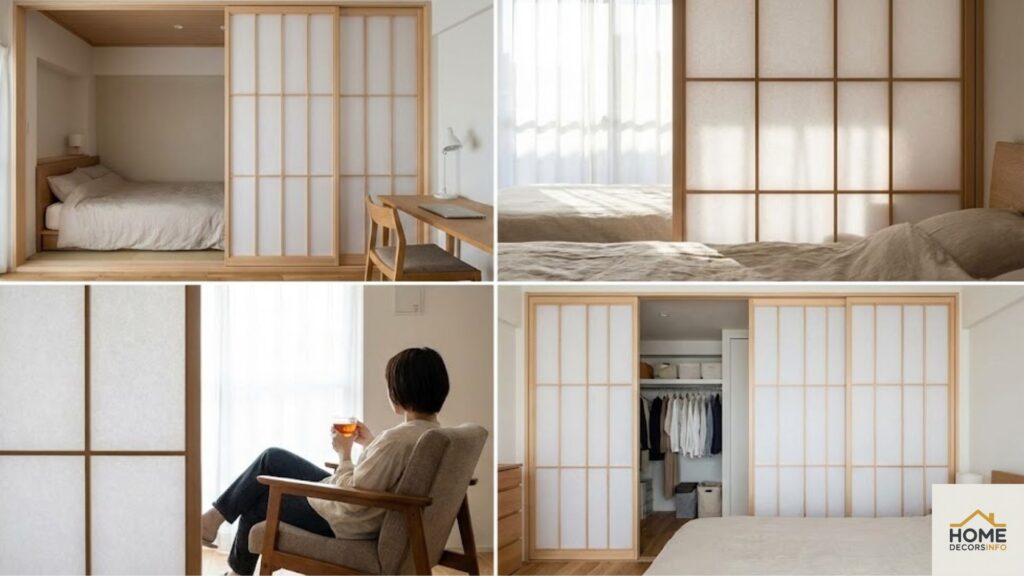
In small homes, bedrooms often have more than one use. They can be used as places to work or relax. Shoji screens make it easy to deal with these overlaps. They make you feel like you’re in a retreat when you put them between a bed and the rest of the room.
Shoji screens for small homes feel especially nice in this setting. Their presence helps you relax and sleep better. They also let light in in the morning, which is softer than direct sunlight. Many people say that shoji screens for small homes make their bedrooms feel more organised and less cluttered.
8. Adding warmth with texture and material
How a space feels depends a lot on its texture. Shoji screens add a mix of wood and soft surfaces that make a room feel warmer right away. This is very useful in modern apartments with plain walls and hard floors.
When you add natural fabrics, plants, and light-colored furniture to shoji screens for small homes, they give the room a layered look that feels cozy but not too crowded. They remind us that even small spaces can feel warm and welcoming. With shoji screens for small homes, the goal changes from filling space to changing the mood.
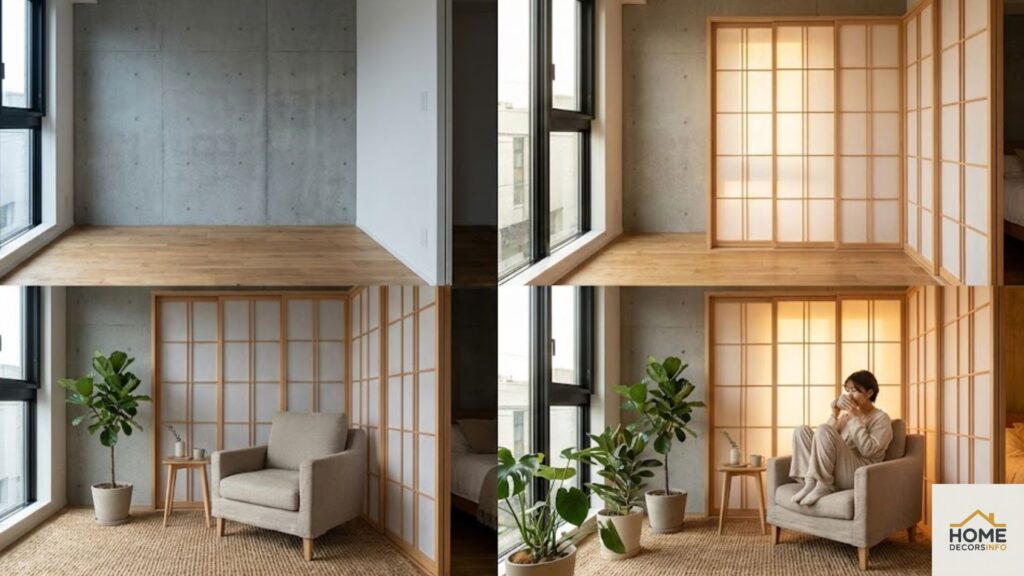
9. Layouts that can change for everyday use
Life changes a lot, and small homes need to be able to keep up. Shoji screens are great for layouts that need to be flexible because they are easy to move, fold, or slide. One day, people might come over to your living room. Next, it could be a quiet place to work.
This flexibility is one of the best reasons to use shoji screens in small homes. They help you stick to routines without forcing you to stick to one. You might find that shoji screens for small homes help you use your space in new ways over time, based on how you actually live instead of how rooms are usually labeled.
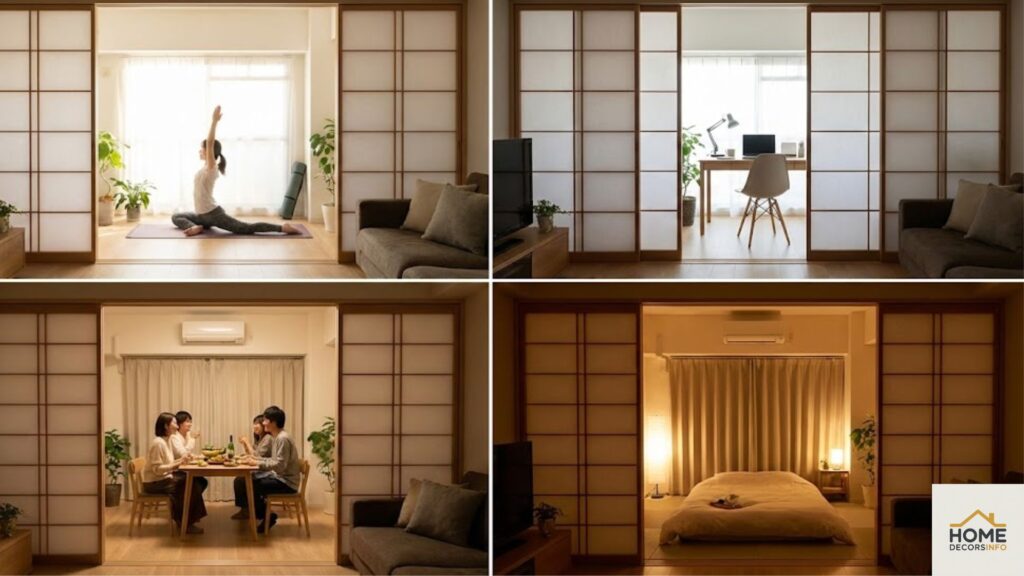
10. How to Use Style Shoji Screens For Small Homes
It doesn’t take much work to style shoji screens. They work because they are simple. Keep the decorations around you simple and let the light in. The look is enhanced by low furniture, neutral colors, and open shelving.
In modern homes, shoji screens for small spaces often look best when they match other things in the room. Wooden frames can match the floors or shelves, which makes the room look better. This careful repetition makes shoji screens for small homes feel like they belong in the room, not like they were added later.
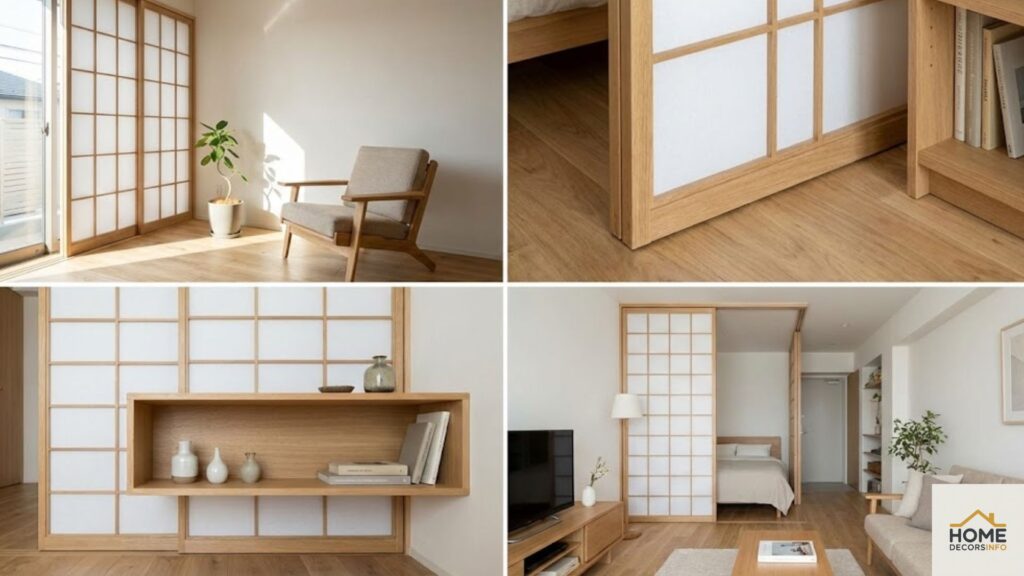
11. Partitions for small spaces that feel personal
Every house has a story to tell. You can gently change that story with shoji screens. They help define how rooms are used while still leaving room for personal touches.
To make the room feel more alive, you can put artwork nearby, add a comfortable chair, or style a plant in the corner. For small homes, shoji screens make a quiet background for these details. They work so well in real homes because they never fight for attention.
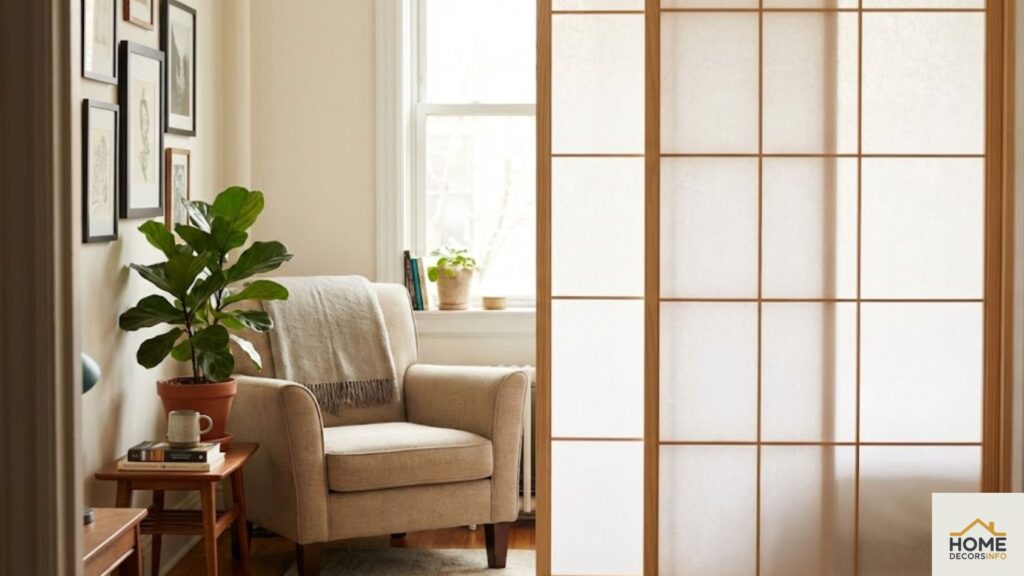
12. Daily Care and Use Over Time
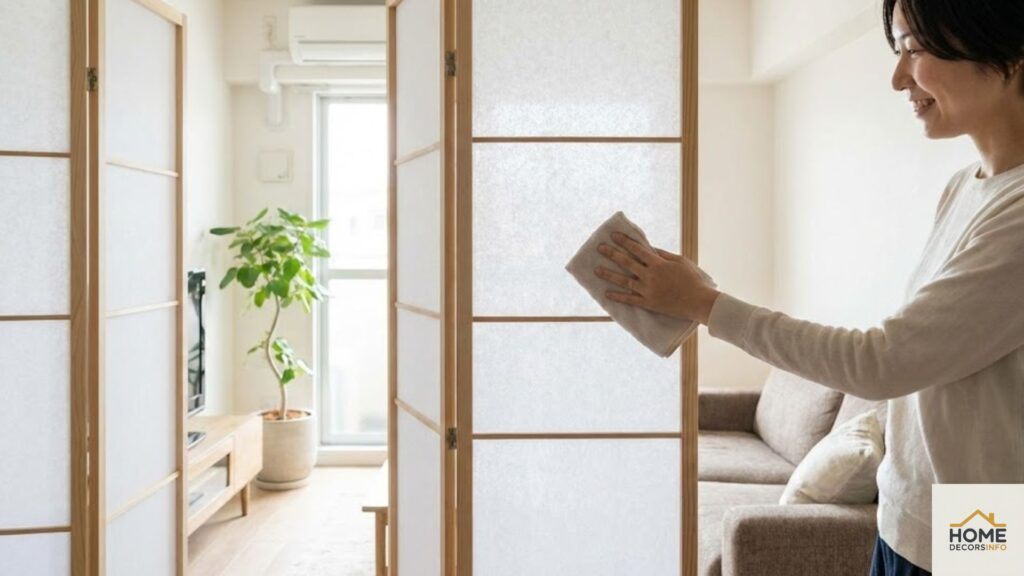
When you choose the right shoji screens, taking care of them is easy. Modern versions often use strong materials that can handle daily use. Taking care of them and keeping them clean will help them last longer.
This is important in small homes where everything gets more use. Shoji screens are more than just pretty things for small homes. They become a part of everyday life. Over time, a lot of people get used to how shoji screens for small homes change their lives.
A Thoughtful Ending
We need to be intentional when we live in small homes. Every decision you make, from where to put your furniture to how light moves through a room, is important. Shoji screens are a way to do this with calm and creativity. They help separate space without making it smaller, add warmth without making it cluttered, and allow for flexible living without stress. If you take care of them, shoji screens for small homes can be more than just decoration. They become a quiet part of your daily life, reminding you to slow down, enjoy the light, and appreciate the beauty of simple design choices that really work for you.
Check Out Our Latest Article: Japanese Plant Styling Ideas for Living Rooms and Bedrooms Indoor Calm Decor
FaQs:
What are shoji screens used for in small homes?
Shoji screens are used to divide space, add privacy, and soften light without making small homes feel closed in.
Are shoji screens suitable for modern interiors?
Yes, modern shoji screens blend easily with contemporary interiors through clean lines, neutral tones, and simple materials.
Do shoji screens block natural light?
Shoji screens filter light gently, allowing brightness to pass through while reducing glare and harsh shadows.
Can shoji screens replace walls in small apartments?
Shoji screens work well as flexible alternatives to walls, offering separation without permanent construction.
How do shoji screens support minimalist living?
They encourage simplicity by defining space with minimal structure, helping rooms feel organized and calm.