Table of Contents
- 1 The Core Principles of a Japanese-Inspired Living Room
- 2 8 Japanese Living Room Ideas for Small Flats
- 2.1 1. Replace Your Sofa With a Low Floor Sofa or Floor Cushions
- 2.2 2. Choose a Low Wooden Coffee Table
- 2.3 3. Use a Neutral Rug to Define the Seating Area
- 2.4 4. Limit the Television’s Visual Dominance
- 2.5 5. Bring in One Statement Plant
- 2.6 6. Replace Overhead Lighting With Layered Warm Light
- 2.7 7. Clear the Walls and Use Minimal, Intentional Art
- 2.8 8. Edit Your Storage to What Is Actually Used
- 3 Budget Guide: Japanese Living Room Makeover in India
- 4 What to Remove From Your Living Room First
- 5 Conclusion
- 6 Frequently Asked Questions
- 6.1 Can I create a Japanese living room if my flat has coloured walls?
- 6.2 Is Japanese living room style practical for a joint Indian family?
- 6.3 How do I keep a minimalist living room looking calm with young children?
- 6.4 What is the difference between Japanese and Scandinavian minimalism for a living room?
- 6.5 How many cushions should a Japanese-style living room sofa have?
- 6.6 Does a Japanese living room work with a television?
The living room in most Indian flats does a lot of work. It is where the family watches television, where guests are entertained, where children do homework, and where everyone collapses at the end of a long day. With all of that happening in a space that might be no bigger than 120 to 150 square feet, it is no surprise that most Indian living rooms feel permanently crowded, cluttered, and slightly exhausting to be in.
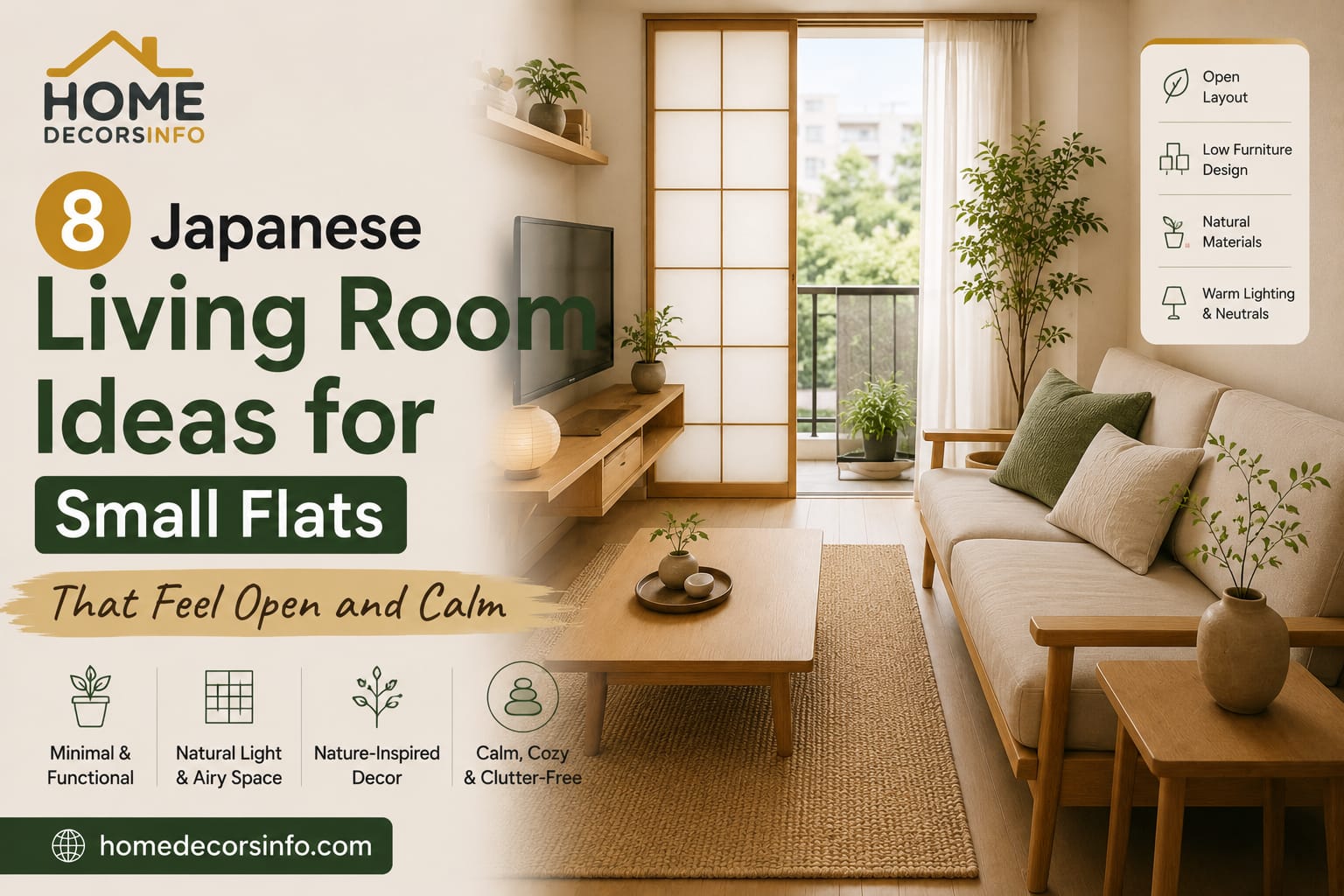
Japanese interior design offers a genuinely different way of thinking about the living room — not as a multi-purpose room that is always trying to do everything at once, but as a deliberately calm space that can accommodate different uses without feeling chaotic. The principles behind this approach are not complicated: keep furniture low and simple, choose a neutral palette, use natural materials, and edit your belongings down to what you actually need and love. The result is a room that somehow manages to feel larger, quieter, and more comfortable than the dimensions on paper would suggest.
In this guide, we will walk through eight Japanese living room ideas for small flats that you can apply in an Indian apartment — with local material references, realistic budget guidance, and practical advice for the specific constraints of Indian compact living.
The Core Principles of a Japanese-Inspired Living Room
Before getting into the specific ideas, it helps to understand what makes a living room feel genuinely Japanese rather than just sparsely furnished. Three principles do most of the work.
The first is low sightlines — furniture that sits close to the floor keeps the eye level low, which makes the ceiling feel dramatically higher and the room feel more open. The second is ma (negative space) — deliberately leaving areas of the room empty rather than filling every corner. In Japanese design, an empty corner is a considered design choice, not a problem waiting to be fixed. The third is organic warmth — natural materials, warm light, and soft neutrals that prevent the minimal approach from feeling cold or clinical.
Together these three principles produce rooms that feel both spacious and warm — a combination that is the hallmark of well-executed Japanese interior design.
8 Japanese Living Room Ideas for Small Flats
1. Replace Your Sofa With a Low Floor Sofa or Floor Cushions
The single most transformative change you can make in a small living room is lowering the seating. A standard Indian sofa sits 45 to 50 centimetres off the ground, which in a room with 9-foot ceilings takes up a disproportionate amount of visual space. A low-profile sofa — sitting 20 to 30 centimetres off the floor — or a set of large floor cushions changes the entire proportion of the room.
With the seating lower, the ceiling appears higher, the room feels more open, and the furniture occupies less of the wall space behind it visually. This effect is especially pronounced in small Indian flats where the living room and dining area share a single open space.
Low platform sofas in neutral linen or cotton fabric are available on Urban Ladder and Pepperfry starting from ₹18,000 to ₹35,000. For a more budget-conscious approach, large floor cushions in linen or cotton fabric (₹800 to ₹2,500 per piece on Amazon India and Ikea India) arranged with a low wooden table create an equally calm and functional seating area at a fraction of the cost. A local tailor can also make large floor cushion covers to order in any fabric you choose.
2. Choose a Low Wooden Coffee Table
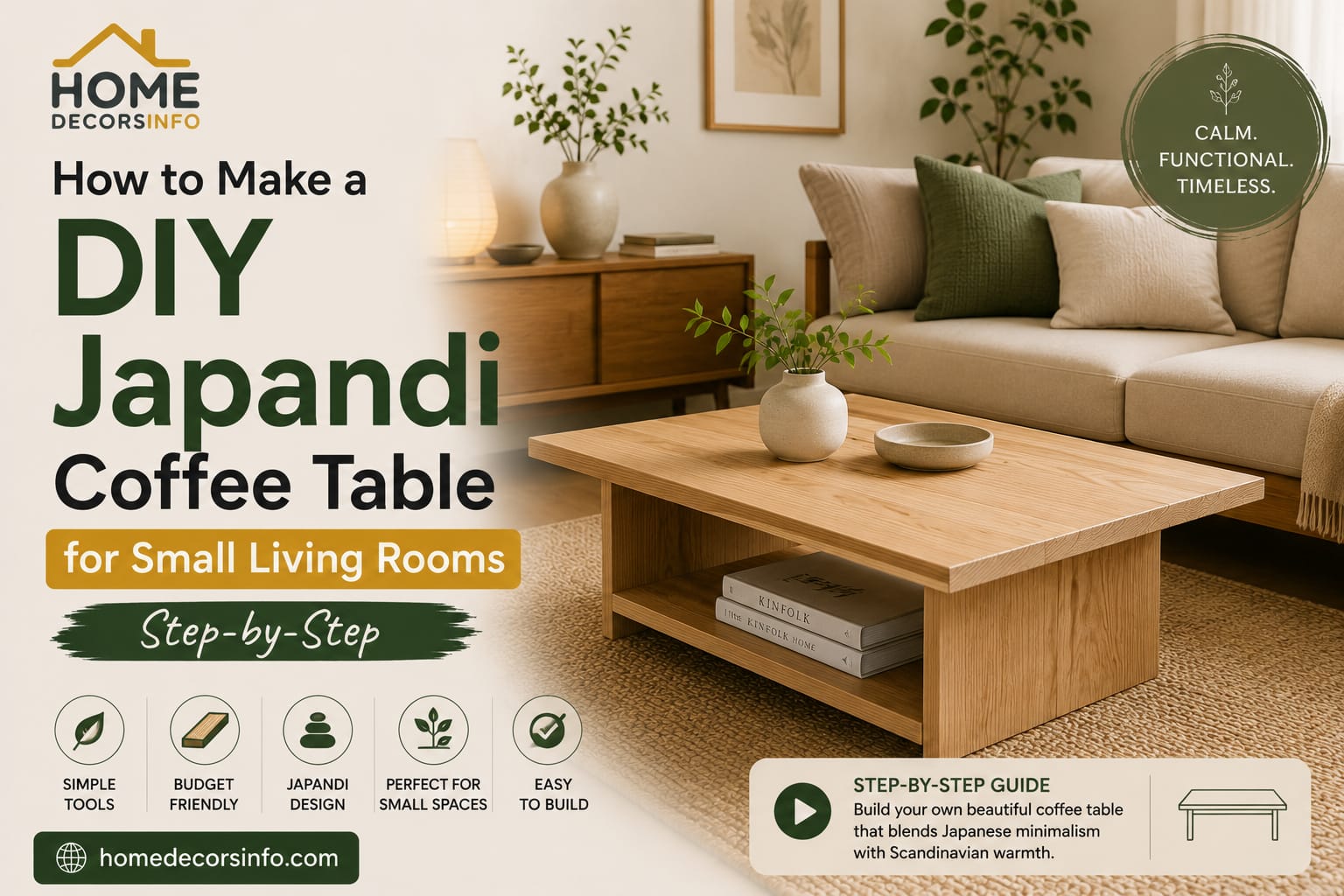
The coffee table is the anchor of any living room, and in a Japanese-inspired space it needs to be low, simple, and made from natural wood. The ideal is a flat, rectangular table in light or warm-toned wood — pine, teak, mango wood, or even a simple plywood slab with a natural oil finish — sitting just 20 to 30 centimetres off the ground.
On this table, the rule is radical restraint. One small plant, a single candle holder, and a coaster. Nothing else. The table is a surface for things in use, not a display surface or a storage solution. When it is not being used, it should be nearly empty. This single discipline — keeping the coffee table clear — does more for the overall calm of a Japanese living room than almost any other single habit.
Low wooden coffee tables are available at local furniture markets in most Indian cities for ₹3,000 to ₹8,000. A carpenter can also build a custom low table to your exact room dimensions — often the most cost-effective option in Indian cities where carpenter labour is affordable — for ₹4,000 to ₹10,000 depending on the wood and finish.
3. Use a Neutral Rug to Define the Seating Area
In a small flat where the living room and other areas share an open floor plan, a rug is the most effective way to define and anchor the seating area without building walls or adding furniture. In Japanese design, the rug should be neutral — jute, cotton, wool, or a flat-weave in cream, sand, warm grey, or natural beige — and large enough to sit under or in front of all the main seating pieces.
A jute rug in particular has exactly the right organic, natural quality for a Japanese-inspired room. It is warm underfoot, durable in Indian conditions, looks beautiful in both simple and slightly more layered interiors, and is available at very reasonable prices — a good quality jute rug in a 150 cm × 200 cm size costs ₹1,500 to ₹4,000 at Ikea India, Amazon India, and local home furnishing stores.
Avoid rugs with bold geometric patterns, bright colours, or heavy traditional motifs in a Japanese-inspired room. The rug should recede visually, not compete for attention. For more inspiration on rug choices for calm living rooms, 10 soft neutral living room rug ideas for calm modern homes covers a range of styles and materials in detail.
4. Limit the Television’s Visual Dominance
The television is a challenging element in Japanese-inspired living room design. In traditional Japanese rooms, there is no television at all. In a modern Indian flat where the TV is a practical necessity, the goal is to minimise its visual presence when not in use.
Three approaches work well. The simplest is mounting the TV flush to the wall on a low, simple TV unit rather than putting it on a tall entertainment unit with multiple shelves and cabinets. A low wooden TV console sitting 20 to 30 cm off the ground keeps the sightline low and integrates better with low seating.
A more involved option is a sliding panel or shoji-style screen that covers the television when not in use — in the spirit of traditional Japanese design where screens were used to conceal and reveal different elements of the room depending on the activity. A local carpenter can build a simple sliding panel frame in wood with rice paper or frosted acrylic for ₹5,000 to ₹12,000.
The third and simplest option is choosing a TV unit in a warm wood finish rather than the common high-gloss black or white, and keeping the wall area around the TV completely clear — no floating shelves above, no decorative items beside it. A bare wall around the television reduces its visual dominance significantly.
5. Bring in One Statement Plant
Plants are non-negotiable in a Japanese living room. They bring the organic, living quality that prevents the minimal aesthetic from feeling empty or clinical. The key word is one — or at most two — placed with intention rather than scattered across every available surface.
For a living room, the best options are plants large enough to make a visual statement: an areca palm in a floor-level white or terracotta pot in a corner, a tall snake plant beside the television unit, or a rubber plant next to the seating area. One large plant in a considered spot does far more for the room than six small plants on various shelves.
The pot matters as much as the plant in a Japanese-inspired room. A simple terracotta pot, a white ceramic pot, or a woven rattan basket planter all complement the natural, warm aesthetic well. Avoid brightly coloured pots, plastic pots, or decorative pots with busy patterns. For detailed ideas on placing plants as part of a calm living room aesthetic, 5 ideas for plant decor in small living rooms and modern homes has a range of practical and beautiful suggestions.
6. Replace Overhead Lighting With Layered Warm Light
Standard Indian living rooms rely entirely on a single overhead light — usually a cool or neutral white LED fitting that illuminates the room evenly and completely. This kind of light is practical but creates a flat, slightly harsh atmosphere that works against the calm quality a Japanese-inspired room aims for.
Japanese interior lighting is layered — multiple lower-level light sources that create pools of warm light rather than a single even overhead wash. The practical translation for an Indian flat:
- Keep the overhead light for functional tasks (cleaning, finding things)
- Add a floor lamp with a warm bulb (2700K) near the seating area — available from ₹1,200 to ₹3,500 on Amazon India and Ikea India
- Add a small table lamp on the TV console or side table — ₹600 to ₹2,000
- Consider a pendant light with a paper or rattan shade above the coffee table — ₹800 to ₹2,500
In the evenings, use only the floor lamp and table lamp rather than the overhead light. The difference in the quality and feel of the room is immediate and significant. Warm, low-level lighting is one of the easiest and most affordable upgrades you can make to any living room.
7. Clear the Walls and Use Minimal, Intentional Art
Indian living rooms often have very busy walls — multiple framed photos, decorative plates, calendars, religious items, clocks, and various hanging objects competing for attention across every available surface. Japanese design takes the opposite approach: mostly bare walls with one or two carefully chosen pieces placed with intention.
This does not mean your walls must be completely empty. A single piece of art or a small collection of three related items in a deliberate arrangement can anchor a wall beautifully. The key is editing — choosing what goes on the wall rather than adding things over time without a plan.
What works well for a Japanese-inspired wall: a single large print of a nature or landscape scene in a simple wooden frame, a small collection of three black-and-white photographs of equal size in matching frames arranged in a horizontal line, or a single piece of calligraphy or minimalist line art. What to avoid: multiple small frames in different sizes, decorative clocks with large cases, and wall shelves crowded with objects.
8. Edit Your Storage to What Is Actually Used
The final and most important element of a Japanese living room is what is not in it. Most Indian living rooms contain several pieces of furniture — side tables, display cabinets, entertainment units, bookshelves, ottomans — that are being used primarily as surfaces on which to accumulate things rather than for their stated purpose. Every unnecessary piece of furniture that leaves the room creates more visual space and calm than any new addition can.
Go through your living room and identify every piece of furniture. For each one, ask: what does this actually do that a simpler alternative could not? If the bookshelf holds forty books you have not touched in five years, keeping thirty of them and storing the rest elsewhere gives you a shelf that looks intentional rather than overloaded. If the side table is covered with objects that do not belong there, clearing it down to one item turns it from clutter into decor.
The practical goal is to have only the furniture that is genuinely used, and to keep the surfaces of that furniture nearly empty. This discipline — more than any specific piece of Japanese design — is what creates the sense of calm space that defines this style.
For a full range of budget-friendly approaches to the Japanese and Japandi living room style, 6 budget living room ideas for small homes in modern Japanese style covers practical transformation ideas at every price point. And for a broader overview of the Japanese living room design tradition in modern apartment contexts, 10 modern Japanese living room design ideas for small spaces is worth reading alongside this guide.
Budget Guide: Japanese Living Room Makeover in India
| Item | Budget Option | Mid-Range Option | Where to Buy |
|---|---|---|---|
| Low seating | Floor cushions ₹2,000–₹5,000 | Low platform sofa ₹18,000–₹30,000 | Amazon India, Ikea, Urban Ladder |
| Low coffee table | Local market ₹3,000–₹6,000 | Pepperfry / custom ₹6,000–₹12,000 | Local furniture markets, Pepperfry |
| Neutral rug | Jute rug ₹1,500–₹3,000 | Wool/cotton ₹3,500–₹7,000 | Ikea India, Amazon India |
| Floor lamp | ₹1,200–₹2,000 | ₹2,500–₹4,000 | Amazon India, Ikea India |
| Statement plant + pot | ₹200–₹500 | ₹500–₹1,500 | Local nursery, Ugaoo |
| Wall art (single piece) | Printed poster + frame ₹500–₹1,200 | Canvas art ₹1,500–₹4,000 | Amazon India, local frame shops |
What to Remove From Your Living Room First
Before buying anything, a Japanese-inspired living room transformation should begin with removal. Here is a practical checklist of what to take out of a typical Indian living room to immediately create more calm and space:
- Any furniture piece that is not regularly used (extra side tables, unused ottomans, decorative cabinets that hold nothing essential)
- Everything on top of the coffee table except one or two items in active use
- All but one or two items from every shelf in the room
- Any wall-mounted items that do not contribute to the room’s calm (calendars, cluttered photo grids, decorative plates)
- Any floor-level items that are not furniture (boxes, bags, random stored items)
- Bright or heavily patterned soft furnishings — replace with neutral alternatives when budget allows
In most Indian living rooms, this removal process alone — with no purchases at all — creates a noticeably more open and calm space. The purchases that follow are then about enhancing a room that already feels better, rather than trying to fix a room that is still too full.
Conclusion
A Japanese-inspired living room in a small Indian flat is not about making the space look like a hotel lobby or a design magazine photograph. It is about creating a room that genuinely feels calm to be in — where you can relax properly, where guests feel welcome and comfortable, and where the space itself supports the quality of the time spent in it. The eight ideas in this guide can be applied gradually, in any order, and at any budget. Start with the one that feels most achievable this weekend, and notice the difference it makes before moving on to the next.
Frequently Asked Questions
Can I create a Japanese living room if my flat has coloured walls?
Yes, though neutral walls do make it easier. If your walls are a medium colour and you cannot repaint (as is common in rented Indian flats), focus on bringing in neutral soft furnishings — a cream or sand rug, neutral cushion covers, natural linen curtains — to counterbalance the wall colour. Light-coloured furniture in natural wood tones will also help. As a longer-term plan, white or warm white walls make the biggest single difference to a Japanese-inspired living room and are worth the effort if you own your flat.
Is Japanese living room style practical for a joint Indian family?
With some adjustments, yes. The low seating and floor cushion approach works well for a multigenerational household if older family members are comfortable sitting lower. The main practical challenge is storage — joint families typically have more belongings, which can work against the minimal aesthetic. The solution is investing in smart, closed storage rather than open shelves — items are stored but not visible, maintaining the calm visual quality of the room while accommodating the practical needs of a larger household.
How do I keep a minimalist living room looking calm with young children?
The key is closed storage — baskets with lids, closed cabinets, and dedicated toy storage areas that are out of sight when not in use. Keep the main living area surfaces clear and designate one basket or cabinet as the children’s zone where their things live. A quick five-minute reset at the end of each day — returning everything to its place — is enough to maintain the calm aesthetic even with active children in the home.
Both styles value simplicity, natural materials, and neutral palettes, but there are meaningful differences. Japanese minimalism tends toward warmer, more earthy tones (sand, clay, muted green) and lower furniture profiles. Scandinavian design often uses cooler whites and greys with furniture at standard Western heights. Japanese design also places more emphasis on the intentionality of empty space (ma) and the imperfect beauty of natural materials (wabi-sabi), whereas Scandinavian design leans more toward clean lines and functional precision. Both work well in Indian apartments.
How many cushions should a Japanese-style living room sofa have?
Two to four cushions on a sofa is the sweet spot for a Japanese-inspired living room. They should all be in the same neutral colour family — different textures (linen, cotton, a knitted cover) in the same tonal range work well together. Avoid large collections of cushions in multiple patterns and colours. The goal is for the sofa to look calm and considered, not dressed up. One simple throw blanket in a natural tone completes the look without adding visual clutter.
Does a Japanese living room work with a television?
Yes, with thoughtful placement. Mount the TV on the wall at a low height consistent with the low seating, use a simple wooden TV console rather than a tall entertainment unit, and keep the area around the screen clear of objects. A flat-screen television on a plain wall is much less visually disruptive than one surrounded by shelving, decor, and cables. Concealing cables neatly — into cable channels or behind the wall panel — significantly reduces the visual noise around the TV area.
Written by Sirisha Kumari for HomeDecorsInfo. Which of these living room ideas are you most excited to try in your flat? Drop a comment below and let me know — and if you have already tried any Japanese-inspired changes in your living room, I would love to hear how it turned out for you