Table of Contents
- 1 Starting the day with calm intention:
- 2 Keeping surfaces clear but not empty:
- 3 Letting natural materials set the mood:
- 4 Creating small reset moments throughout the day:
- 5 Choosing multifunctional pieces with care:
- 6 Practising mindful storage in quiet corners:
- 7 Bringing in Japanese-inspired simplicity:
- 8 Letting light guide your evening routines:
- 9 Editing decor slowly and with intention:
- 10 Ending the day with a gentle tidy:
- 11 FAQs
Daily minimalism habits that make your home feel more peaceful for a calm and simple living space. It can be hard to live in a small house or apartment. You want it to look calm and inviting, but life gets in the way with mess, noise, and a sense of movement all the time. That’s where daily habits that are minimal come in. They don’t mean having an empty house or following strict rules. Instead, they help you pay attention to how your space feels and how little things can change your mood. If you do them right, daily minimalist habits can make even the smallest rooms feel cozy and personal. In the evening, think about soft light, and in the morning, think about clear surfaces and rooms that feel a little more open. It is about making peace without stress and beauty without too much.
Starting the day with calm intention:
How you start your day often sets the mood for the whole house. You can make the space feel more grounded by opening the curtains to let in natural light, making the bed with plain linen, and cleaning off one small surface. These simple habits don’t take long, but they quietly show that things are in order and easy. Even on busy days, a bedroom with light colors and natural textures feels less rushed. This method helps people live in a peaceful home by focusing on being present rather than being perfect. As time goes on, mornings feel softer, and your home becomes a place that helps you instead of asking for your attention.
Keeping surfaces clear but not empty:
Clear surfaces are good for the eyes, especially in small rooms. This doesn’t mean getting rid of everything. It means picking what deserves to be there. A ceramic bowl by the door, a wooden tray on a coffee table, or a single framed photo can be enough. Daily minimalist habits around surfaces help you keep your space clean without making it feel cold. Keeping the space calm is as easy as putting things back where they belong at night. When surfaces stay intentional, the room is easier to live in and enjoy.
Letting natural materials set the mood:
Natural materials subtly affect the feel of a home. Wood, linen, clay, and stone add warmth without making the room look busy. When you reach for these textures every day, you create daily minimalist habits that help you live a peaceful daily minimalist habits. A wooden stool that can be used as a bedside table or a folded linen throw on the couch adds comfort without taking up too much space. These choices fit with the ideas of a minimalist lifestyle because they age well and feel honest. Your home starts to feel like a place where you can relax and take things easy over time.
Creating small reset moments throughout the day:
When homes are gently reset instead of deeply cleaned all at once, they feel more peaceful. Cleaning up quickly after breakfast or doing a light sweep in the evening keeps things moving. These little resets turn into daily minimalist habits that help keep the home calm. They are simple daily routines that work well in real life. You don’t feel behind, you feel caught up. Nothing can pile up for too long, so the home stays welcoming even when things get busy.
Choosing multifunctional pieces with care:
Every item counts in small spaces. Furniture that can be used in more than one way makes it easy to stick to daily minimalist habits every day. A table that folds up, a bench with storage, or a shelf that also serves as a divider all help the room stay flexible. These choices show that you live a minimalist lifestyle at home that values function and flow. Rooms feel lighter and more open when the furniture fits your needs. You can easily move around the house, and it feels ready for anything that comes up.
Practising mindful storage in quiet corners:
You don’t have to hide storage completely. You can make storage a part of the design. Baskets made of natural fibres, low cabinets in soft wood tones, or open shelves that are carefully styled all help you keep your daily minimalist habits while also making your home feel warmer. Being mindful at home means noticing when your storage is full and gently editing it. This stops the house from feeling heavy. Quiet corners stay useful and calm to look at, which helps people feel like things are in order without having to follow strict rules.
Bringing in Japanese-inspired simplicity:
Minimalism inspired by Japan is all about balance, emptiness, and respecting materials. Using these ideas in your daily life can change the way your home feels. Low furniture, neutral colors, and open floor space make it easier to move around without getting too excited. Simple, daily minimalist habits activities like sitting on the floor with a cushion or having tea without distractions help you connect with the space. This way of thinking values experience over display, which supports peaceful minimalist living. The home is a place to stop, not to work.

Letting light guide your evening routines:
Lighting makes a big difference. Soft lamps, warm bulbs, and soft shadows help the house relax. One of those daily minimalist habits that signals rest is turning off the overhead lights and turning on a table lamp. These are habits you can do every day to make your home more peaceful. They may seem small, but they work very well. Light has a bigger effect on mood than decor ever could. Rooms feel cozy and safe when the lights are low in the evening, even in small apartments.
Editing decor slowly and with intention:
You don’t have to buy all of your decor at once. Letting things come and go naturally helps you build daily minimalist habits that are simple and feel good. You can figure out what you really like by living with something for a while before adding more. This method works with simple living routines and encourages a minimalist home life that can grow with you. Instead of yelling for attention, the home tells a story over time.
Ending the day with a gentle tidy:
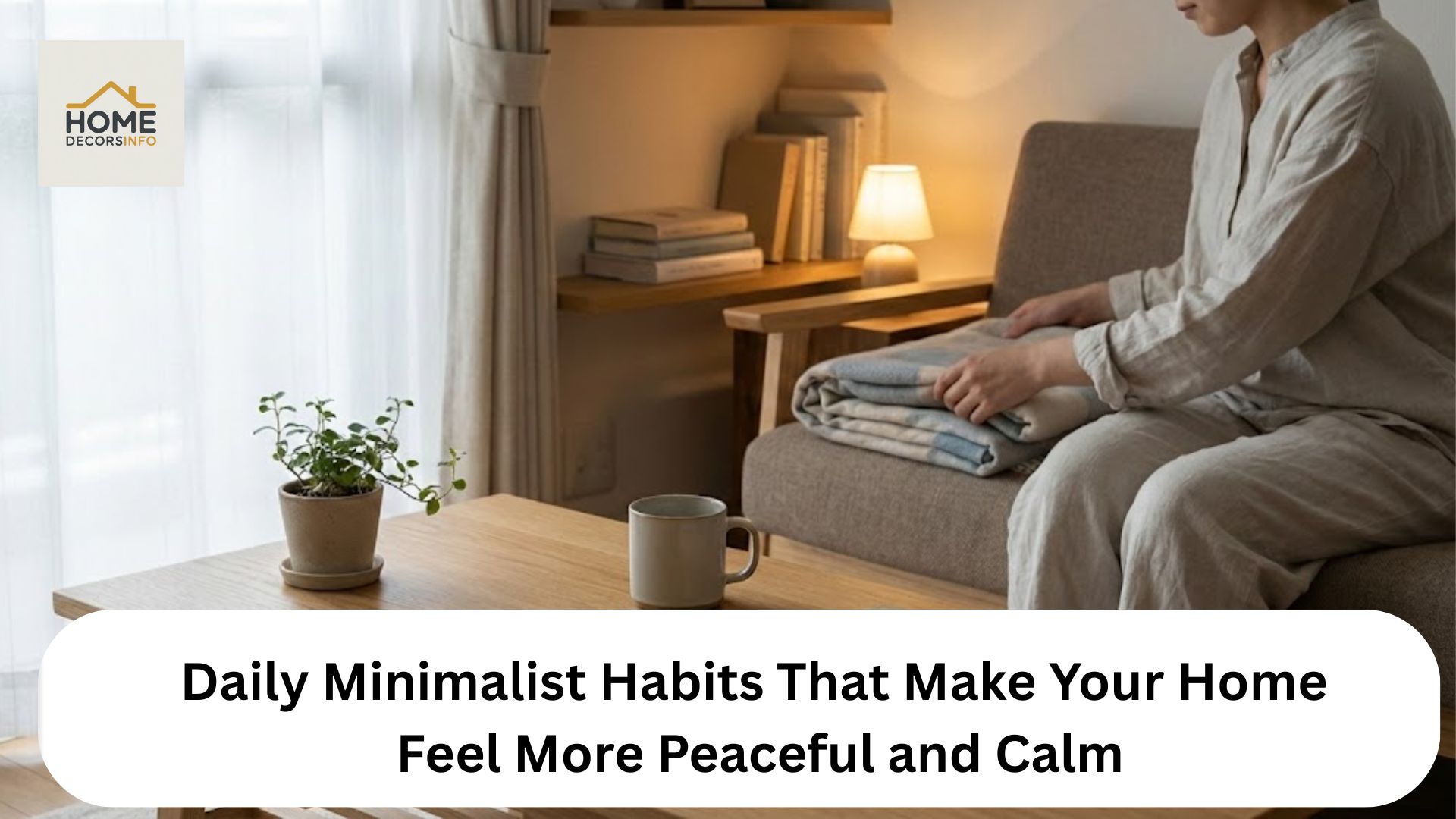
A calm night routine makes getting up in the morning easier. Folding throws, washing a few dishes, and getting ready for tomorrow are all daily habits that help you feel like you’ve finished something. These daily minimalist habits at home that you pay attention to help the space feel calm before bed. You are responsible for the home. When you wake up to a clean room, the day starts off clear instead of messy.
You don’t have to make big changes or follow strict rules to live with purpose. It gets better when you notice how your home helps you and make small changes. You can make your space feel calm, useful, and very personal by doing daily minimalist habits. Over time, these little things make a home that feels calm without you having to work too hard at it. The beauty is in the rhythm, the soft textures, and the quiet confidence of a room that shows how you really live.
Check Out Out Article: 5 Wallpaper Trends for 2026 That Bring Timeless Character to Your Walls
FAQs
1. What are daily minimalist habits?
They are small, consistent actions that help keep your home calm, organised, and visually balanced.
2. Can minimalist habits work in small apartments?
Yes, they are especially helpful in small spaces where clutter shows up quickly.
3. Do minimalist habits require buying new furniture?
No, they focus more on how you use and care for what you already have.
4. How long does it take to see changes in a minimalist home?
Most people notice a calmer feel within a few days of consistent routines.
5. Is minimalist living suitable for families?
Yes, simple routines can be adapted easily for shared spaces and busy homes.