Table of Contents
- 1 The Japanese Philosophy Behind Decluttering
- 2 How to Declutter Your Home the Japanese Way: 7 Simple Steps
- 2.1 Step 1 — Start With Your Mindset, Not Your Wardrobe
- 2.2 Step 2 — Take Everything Out of One Area at a Time
- 2.3 Step 3 — Hold Each Item and Ask the Right Question
- 2.4 Step 4 — Sort Into Three Clear Piles
- 2.5 Step 5 — Declutter Category by Category, Not Room by Room
- 2.6 Step 6 — Give Everything a Specific Home
- 2.7 Step 7 — Let Go Gently and With Gratitude
- 3 Which Areas of Your Home to Tackle First
- 4 What to Do With Things You Are Letting Go
- 5 How to Keep Your Home Decluttered Over Time
- 6 How Japanese Decluttering Connects to Calm Decor
- 7 Decluttering for Indian Homes: A Few Extra Notes
- 8 Conclusion
- 9 Frequently Asked Questions
- 9.1 What is the Japanese method of decluttering called?
- 9.2 How long does it take to declutter a home the Japanese way?
- 9.3 What should I do with items I am not sure about?
- 9.4 Is it okay to keep sentimental items when decluttering?
- 9.5 How do I stop the clutter from coming back?
- 9.6 Can I apply Japanese decluttering principles in a joint family home?
There is a moment most of us have had — standing in the middle of our living room, looking around at piles of things we never use, feeling oddly tired just from being in that space. If your home feels more like a storage unit than a place to rest, you are not alone. Homes in India, especially apartments in cities like Hyderabad, Chennai, or Bengaluru, tend to collect things fast. A side table becomes a dumping ground. The spare bedroom fills up with old electronics, kids’ old textbooks, gifts nobody ever opened.
The Japanese have been dealing with this for centuries. Living in small spaces is not new to Japan — and they developed a way of thinking about the home that treats every object with intention. It is not just about throwing things away. It is about choosing what truly belongs in your life and letting go of the rest without guilt. I tried this approach in my own one-bedroom flat a few years ago, and the difference in how the space felt was almost immediate. The room did not get bigger, but it somehow felt like it did.
This guide will walk you through how to declutter your home the Japanese way — step by step, without making it feel overwhelming. We will look at the philosophy behind it, practical methods you can apply this weekend, and what to do with items once you decide to let them go.
The Japanese Philosophy Behind Decluttering
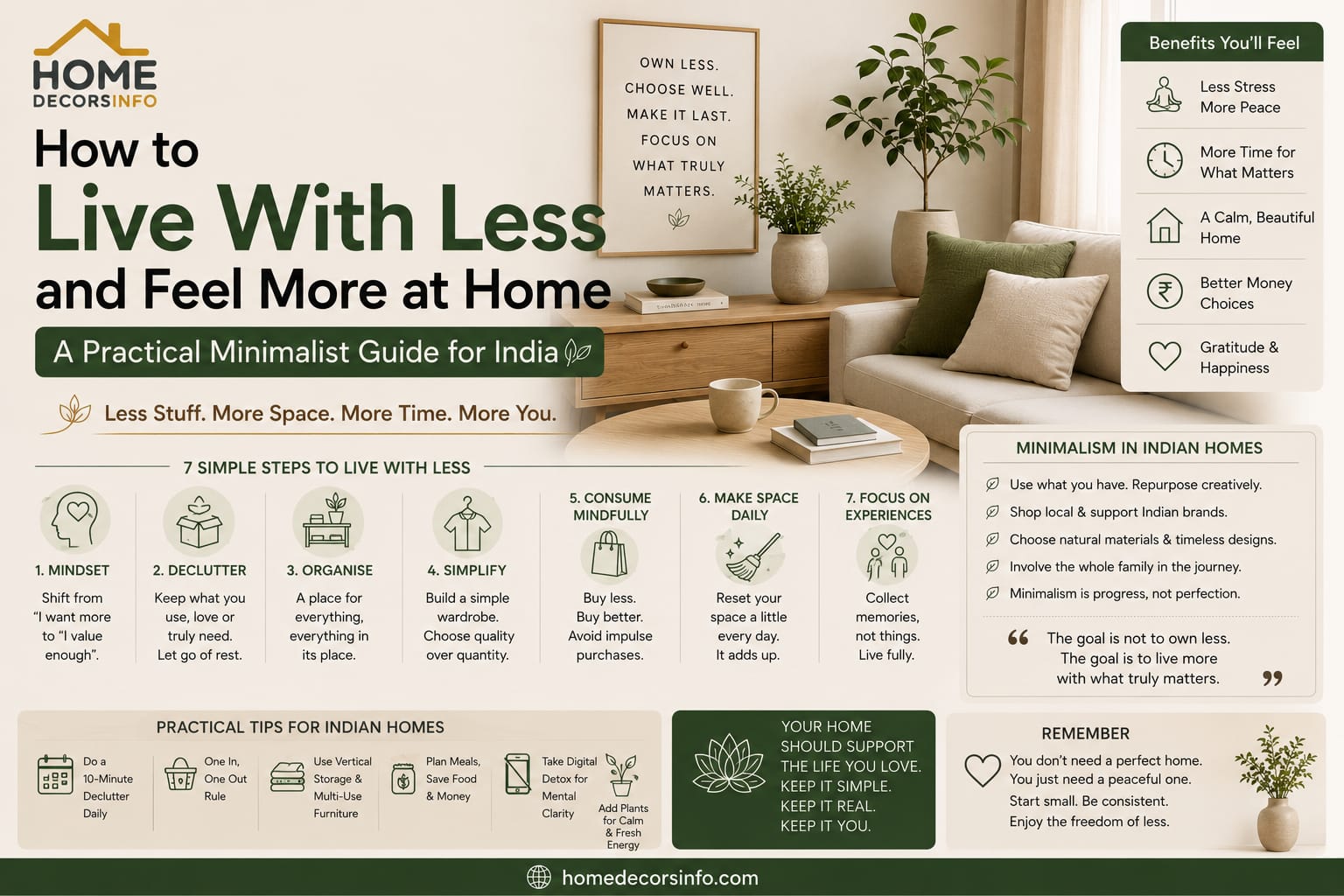
Before we get into the steps, it helps to understand where this approach comes from. Japanese minimalism is not about having an empty, cold-looking home. It comes from two ideas that work together beautifully.
Wabi-Sabi: Finding Beauty in Simplicity
Wabi-sabi is a Japanese worldview that finds beauty in imperfection and simplicity. A cracked clay pot. A worn wooden table. A single plant on a windowsill. Nothing needs to be shiny or perfect — but everything should belong. When you apply this to decluttering, you stop chasing the idea of more and start appreciating the few things you actually love. It changes your relationship with your belongings entirely.
Ma: The Power of Empty Space
In Japanese design, “ma” refers to meaningful negative space — the pause, the gap, the empty corner. An empty shelf is not wasted space; it is breathing room. When you understand this, you stop feeling the urge to fill every surface in your home. Empty space becomes intentional and calming rather than something to be fixed.
Together, these two ideas form the heart of Japanese decluttering. You are not just organising. You are making space for calm.
How to Declutter Your Home the Japanese Way: 7 Simple Steps
Step 1 — Start With Your Mindset, Not Your Wardrobe
Most decluttering guides tell you to start with clothes. But the Japanese approach asks you to start with your thinking. Before you touch a single object, sit quietly for a few minutes and ask yourself: what kind of home do I want to live in? What does calm feel like to me?
Write it down if that helps. This small step stops the process from feeling like a chore. You are not throwing your life away — you are redesigning it intentionally. When you have a clear picture of how you want your space to feel, every decision in the following steps becomes easier.
Step 2 — Take Everything Out of One Area at a Time
Do not try to declutter your entire flat in one day. That is a recipe for burnout. The Japanese method works best when you focus on one category or one area completely before moving on.
Pick a starting point — your kitchen shelves, the top of your dresser, one cupboard — and take everything out. All of it. Lay it on a flat surface so you can see exactly what you own. This often surprises people. Most of us have no idea how much we have accumulated in a single drawer until it is all sitting in front of us at once.
Step 3 — Hold Each Item and Ask the Right Question
This is the step made famous by organisation consultant Marie Kondo, which is deeply rooted in Japanese tradition: hold each item in your hands and ask, does this bring me joy? But we can make this more practical for everyday homes.
Ask yourself three things about each object:
- Have I used this in the last six months?
- Would I buy this again if I did not already own it?
- Does it belong in the kind of home I want to live in?
If the answer to all three is no, it is time to let it go. Do not overthink it. The Japanese approach teaches that holding onto things “just in case” creates invisible mental clutter even when you cannot see the object.
Step 4 — Sort Into Three Clear Piles
Once you have held each item and made a decision, sort everything into three groups:
- Keep — Things you genuinely use, love, or need.
- Let Go — Things to donate, sell, or recycle.
- Unsure — Put these in a box, seal it, and store it out of sight for 30 days. If you do not think about it once during those 30 days, let it go.
The “unsure” box is a gentle way to ease the anxiety many people feel about giving things away. You are not making a final decision yet — you are testing whether you actually need it. Most of the time, you will forget the box is even there.
Step 5 — Declutter Category by Category, Not Room by Room
Here is where the Japanese method differs from how most people approach tidying. Instead of going room to room, work through categories across the whole house. Do all your clothes first — from every room, every drawer, every bag stored on top of the wardrobe. Then books. Then kitchen items. Then papers. Then miscellaneous.
Why does this matter? Because when you gather every single item in one category together, you see the full picture. You might have five identical pairs of scissors across different rooms. You might own more bed sheets than you have ever needed. Seeing everything together makes decisions much clearer and prevents you from shifting clutter from one room to another.
Step 6 — Give Everything a Specific Home
Once you have decided what to keep, every item needs its own designated place. This is a core principle in Japanese organisation. Nothing should be “floating” — left on a counter because you are not sure where it belongs.
A good rule: if something does not have a home, it either needs one or it needs to go. Assign storage thoughtfully. Kitchen tools near the stove. Chargers near a dedicated charging spot. Books on one shelf, not scattered across three rooms. When everything has a place, putting things away becomes automatic rather than a decision you have to make every time.
Small homes in India often have limited storage. This is where DIY home projects for small spaces can genuinely help — simple wall shelves, under-bed storage, and multi-use furniture can give every item a proper home without major renovation costs.
Step 7 — Let Go Gently and With Gratitude
This part sounds unusual but it is very real in Japanese culture. When you release an item — whether you donate it, sell it on OLX or Facebook Marketplace, or recycle it — take a moment to acknowledge what it gave you. Even a shirt you bought and never wore served a purpose: it taught you what you do not need.
This practice removes the guilt that often stops people from decluttering. You are not wasting something. You are releasing it to be useful elsewhere. This small mental shift makes it much easier to let go of the “expensive but unused” items that sit in Indian homes for years out of guilt.
Which Areas of Your Home to Tackle First
If you are wondering where to begin, here is a practical order that works well for Indian apartments and small homes:
| Area | Why to Start Here | Time Needed |
|---|---|---|
| Wardrobe / Clothes | High volume, quick decisions, instant visual result | 2–4 hours |
| Kitchen shelves & drawers | Duplicate items are common; easy to sort | 1–2 hours |
| Bookshelf / Reading area | Books are emotionally loaded — do them after clothes | 1 hour |
| Living room surfaces | Biggest visual impact on how the whole flat feels | 1–2 hours |
| Spare room / Storage area | Often the most neglected — save for after you have momentum | 3–5 hours |
| Digital clutter (phone, laptop) | Often overlooked but adds to mental load | 1 hour |
What to Do With Things You Are Letting Go
Decluttering only works if the items actually leave your home. A pile in the corner for three months is not decluttering — it is just relocating the clutter.
Donate Locally
Goonj is one of India’s most trusted organisations for donating used clothes, books, utensils, and household goods. They have collection points and pickup options in many cities. Local temples, churches, and mosques often accept donations too. If you live in a housing society, a notice board post about free items moves things very quickly.
Sell on OLX or Facebook Marketplace
For items with some resale value — old electronics, furniture, kitchenware — OLX and Facebook Marketplace are the fastest options in most Indian cities. Price items slightly lower than you expect and they will sell within days. You make a little money and the item goes to someone who will actually use it.
Recycle Responsibly
Old electronics should not go into general waste. Services like Attero and EcoKaro accept e-waste in many cities. Old newspapers and cardboard can go to your local kabadiwala, who will pay you by the kilo and ensure it gets recycled properly.
How to Keep Your Home Decluttered Over Time
The hardest part of decluttering is not the initial clear-out. It is keeping it that way. Japanese households use a simple rule that works beautifully for small homes.
The One In, One Out Rule
Every time something new enters your home, something old must leave. Buy a new kurta? Donate an old one. Get a new kitchen gadget? Pass on the one it is replacing. This one habit alone prevents the slow accumulation that leads back to clutter within six months.
The 5-Minute Evening Reset
In Japan, it is common practice to spend five minutes at the end of each day returning things to their designated homes. Chargers back to the charging station. Books back to the shelf. Bags hung up. This tiny habit keeps the flat feeling calm without ever requiring a big cleaning session.
Mindful Shopping
Before buying anything for the home, wait 48 hours. If you still want it after two days, it is likely a genuine need. Impulse buys in Reliance Smart or on Amazon India are one of the biggest sources of clutter in Indian homes. A short waiting period saves money and keeps surfaces clear.
How Japanese Decluttering Connects to Calm Decor
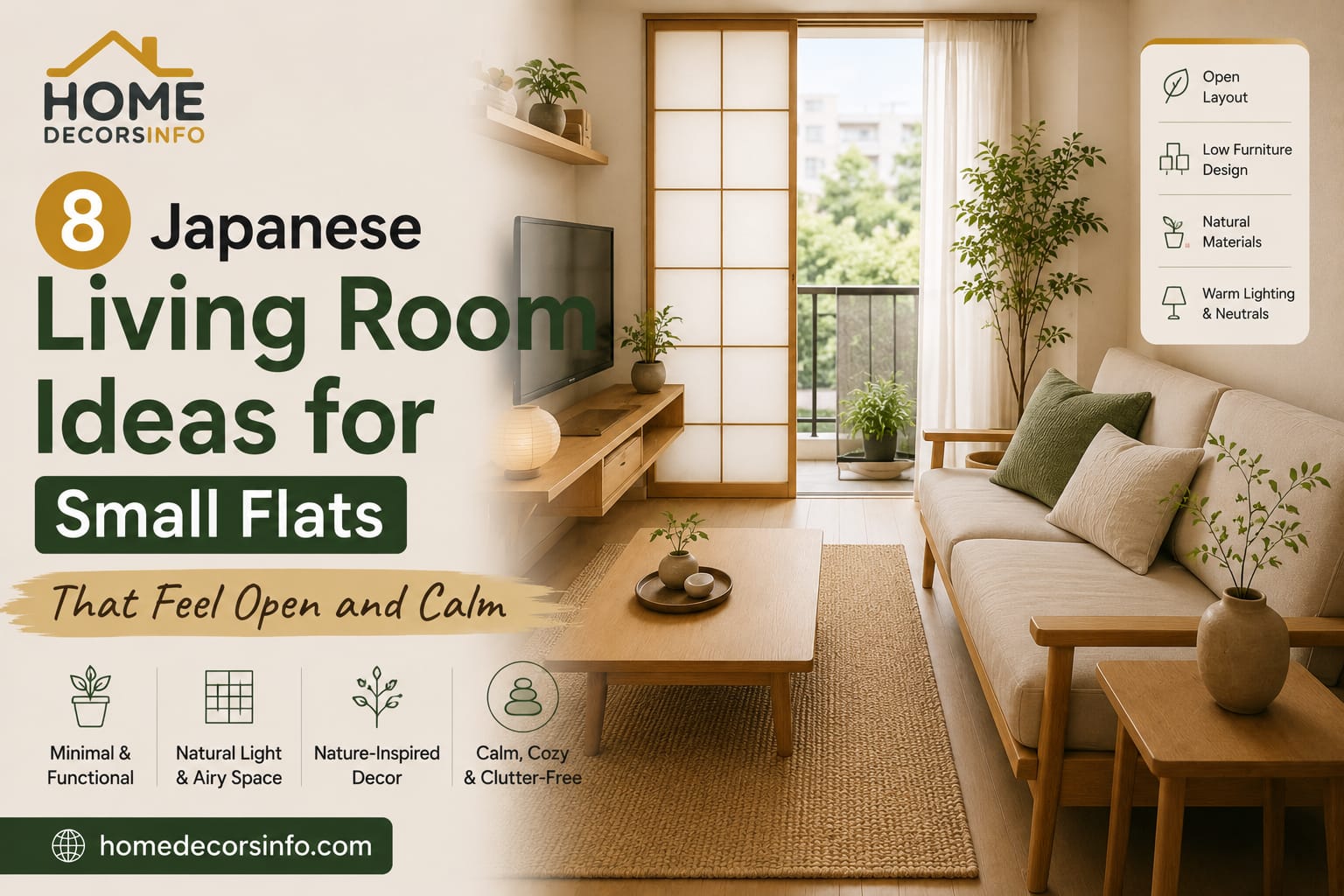
Once you have decluttered, the space you have created is the foundation for the kind of calm, beautiful home that Japanese interior design is known for. A cleared living room shelf is the perfect place for one small plant, a neutral vase, or a single piece of art. The impact is far greater than when those things were competing with twenty other objects for attention.
If you are working on a living room that feels open and intentional, ideas from budget living room ideas for small homes can help you decorate thoughtfully after the declutter is done. Plants also play a big role — a clean, simple space with one or two well-chosen indoor plants immediately feels warmer and more alive. Explore living room plant decor ideas for small spaces for inspiration on adding greenery without overwhelming a minimal setup.
For those curious about the aesthetic principles behind this calm, considered look, the comparison between Japandi vs traditional Japanese decor for small apartments is worth reading. It explains how the two styles differ and how to pick the right one for your home’s character.
You can also reference trusted lifestyle resources like the Art of Living’s guide to minimalist homes for a broader perspective on how a calmer home environment connects to overall wellbeing.
Decluttering for Indian Homes: A Few Extra Notes
Indian homes come with specific challenges that a purely Western or Japanese decluttering guide does not always address. Here are a few things worth keeping in mind.
Festival Decorations and Seasonal Items
Many Indian families keep large quantities of festival decorations — Diwali lights, rangoli sets, Ganesh idols, Navratri garba costumes. These do not need to be eliminated. They are meaningful. The key is dedicated storage: one or two labelled boxes kept in a specific spot, not spread across the top of every wardrobe in the house.
Family Heirlooms and Gifted Items
This is emotionally the hardest part of decluttering in Indian families. Items from grandparents, wedding gifts, things your mother insists you keep. Japanese philosophy is compassionate here: an object can be honoured and released. Taking a photograph of a meaningful item before donating it is a practical and emotionally satisfying way to hold the memory without holding the physical thing.
If you live with family members who are not on board with decluttering, start only with your own belongings. Do not touch or move anyone else’s things. As your area becomes calmer and more pleasant, others in the household often become curious and willing to try it themselves.
Conclusion
Decluttering your home the Japanese way is not a weekend project that you do once and forget. It is a shift in how you think about your space, your belongings, and what truly adds value to your everyday life. Start with one drawer. Work through one category. Be patient and gentle with yourself. The results are not just a tidier home — they are a quieter mind, a calmer start to each morning, and a space that genuinely feels like yours.
Small homes in India and across Asia can absolutely feel spacious, warm, and peaceful when they are designed with intention rather than filled with accumulation. That is exactly what Japanese design has always understood. Now it is your turn to bring that feeling home.
Frequently Asked Questions
What is the Japanese method of decluttering called?
The most well-known Japanese decluttering method is the KonMari Method, developed by organisation consultant Marie Kondo. It is based on sorting belongings by category, holding each item, and keeping only what brings joy. Beyond this specific method, Japanese decluttering draws on broader principles like wabi-sabi (finding beauty in simplicity) and ma (the value of empty space). Together, these ideas form a philosophy of intentional living rather than just a set of organising rules.
How long does it take to declutter a home the Japanese way?
For a typical Indian apartment of 1–2 BHK, a thorough declutter following the Japanese method usually takes between two and four weekends if done in focused sessions of three to four hours each. Larger homes or homes with a lot of accumulated items may take longer. The key is not to rush. Doing it properly once takes longer than a quick tidy, but it produces a lasting result rather than clutter that returns within weeks.
What should I do with items I am not sure about?
Pack them into a sealed box, write the date on it, and store it out of sight for 30 days. If you do not open or think about the box during that time, donate the contents without looking through them again. This method — sometimes called the “maybe box” — removes the anxiety of making an immediate decision while also giving you the clarity that comes from simply not missing things over time.
Is it okay to keep sentimental items when decluttering?
Absolutely. Japanese decluttering philosophy does not ask you to throw away everything that has emotional value. It asks you to be intentional. Keep the things that truly matter to you, display them in a way that honours them, and let go of things you are keeping purely out of guilt or obligation. Photographing items before releasing them is a widely used technique that helps people hold the memory without holding the object itself.
How do I stop the clutter from coming back?
Three habits keep clutter away long term: the one-in one-out rule (every new item means one old item leaves), a five-minute evening reset where everything goes back to its designated place, and a 48-hour waiting period before buying anything new for the home. These habits address the root cause of clutter — accumulation — rather than just managing the symptoms.
Can I apply Japanese decluttering principles in a joint family home?
Yes, but only start with your own belongings. Do not move or discard items that belong to other family members, even if you think those items are unnecessary. Focus on your own wardrobe, your own workspace, and shared areas only with everyone’s agreement. As the calmer, more organised areas of the home become noticeable, other family members often become interested in the process naturally.
—
Written by Sirisha Kumari for HomeDecorsInfo. Have you tried decluttering your home using any of these ideas? I would love to hear how it went — drop a comment below and share what