Table of Contents
- 1 The Core Philosophy: Bathroom as Sanctuary
- 2 7 Japanese Bathroom Ideas for Small Apartments
- 2.1 1. Replace Plastic Accessories With Natural Materials
- 2.2 2. Install a Bamboo or Teak Bath Mat
- 2.3 3. Declutter Every Surface to the Absolute Minimum
- 2.4 4. Add One Small Plant
- 2.5 5. Upgrade the Lighting to Warm and Layered
- 2.6 6. Use White or Neutral Textiles Throughout
- 2.7 7. Create a Small Ritual Corner
- 3 Budget Guide: Japanese Bathroom Transformation in India
- 4 What to Remove From Your Bathroom Before Adding Anything
- 5 Dealing With Small Indian Bathroom Challenges
- 6 Conclusion
- 7 Frequently Asked Questions
The bathroom is the most private room in any home — and yet it is almost always the most neglected when it comes to thoughtful design. Most Indian apartment bathrooms are purely functional: white tiles, a single overhead light, a plastic soap dish, and whatever ends up accumulating on the shelf beside the sink. The result is a room that is perfectly adequate but never actually pleasant to be in.
Japanese bathroom design takes a completely different view. In Japan, the bathroom — particularly the bathing space — is considered a place of genuine restoration. The ofuro tradition of daily soaking in warm water is about mental and physical renewal, not just cleanliness. This attitude toward the bathroom as a place of calm rather than just a utility room produces interiors that are extraordinary in their effect: simple, warm, quiet spaces that feel restorative every time you step into them.
You do not need to rebuild your bathroom to achieve this quality. Most Indian apartment bathrooms can be transformed with small, affordable changes — different materials, better light, a few considered accessories, and the willingness to remove most of what is currently cluttering every surface. This guide covers seven Japanese bathroom ideas for small apartments that you can apply one at a time, starting this weekend.
The Core Philosophy: Bathroom as Sanctuary
Before getting into the practical ideas, it helps to understand the Japanese approach to what a bathroom should be. Three ideas define it.
The first is cleanliness as an aesthetic value. In Japanese design, a clean, clear surface is not empty — it is beautiful. A bathroom counter with nothing on it except what is in active use is the goal, not a sign that something is missing. The second is natural materials — wood, bamboo, stone, and ceramic rather than plastic and synthetic finishes. These materials age beautifully, feel warm and organic, and bring a quality to the space that synthetics simply cannot. The third is calm light — warm, soft, low-level light that signals to the body that the bathroom is a place of rest rather than a place of harsh utility.
Applied together, these three ideas produce a bathroom that feels genuinely different from the standard Indian apartment bathroom — quieter, warmer, and consistently pleasant to use.
7 Japanese Bathroom Ideas for Small Apartments
1. Replace Plastic Accessories With Natural Materials
The single fastest way to change the feel of an Indian apartment bathroom is to replace all plastic accessories with natural material equivalents. Most Indian bathrooms have a collection of mismatched plastic items — a bright coloured soap dish, a plastic toothbrush holder, a plastic shampoo shelf, a plastic bin. Each individual item is inexpensive and unremarkable. Together, they create a visual noise that is the opposite of calm.
Replace them one at a time with simple alternatives in natural materials:
- Bamboo toothbrush holder — available on Amazon India and Ikea India for ₹150 to ₹400
- Ceramic or stone soap dish — available at home décor stores for ₹100 to ₹300
- Wooden or bamboo shelf organiser — ₹200 to ₹600
- Small rattan or cane bin with a lid — ₹300 to ₹800
- Bamboo or teak bath mat — ₹600 to ₹1,800 on Amazon India and Pepperfry
None of these individual changes is expensive, but the cumulative effect of replacing all plastic with wood, bamboo, and ceramic completely changes the atmosphere of the room. The bathroom goes from looking like a collection of utility purchases to looking like a considered, calm space.
2. Install a Bamboo or Teak Bath Mat
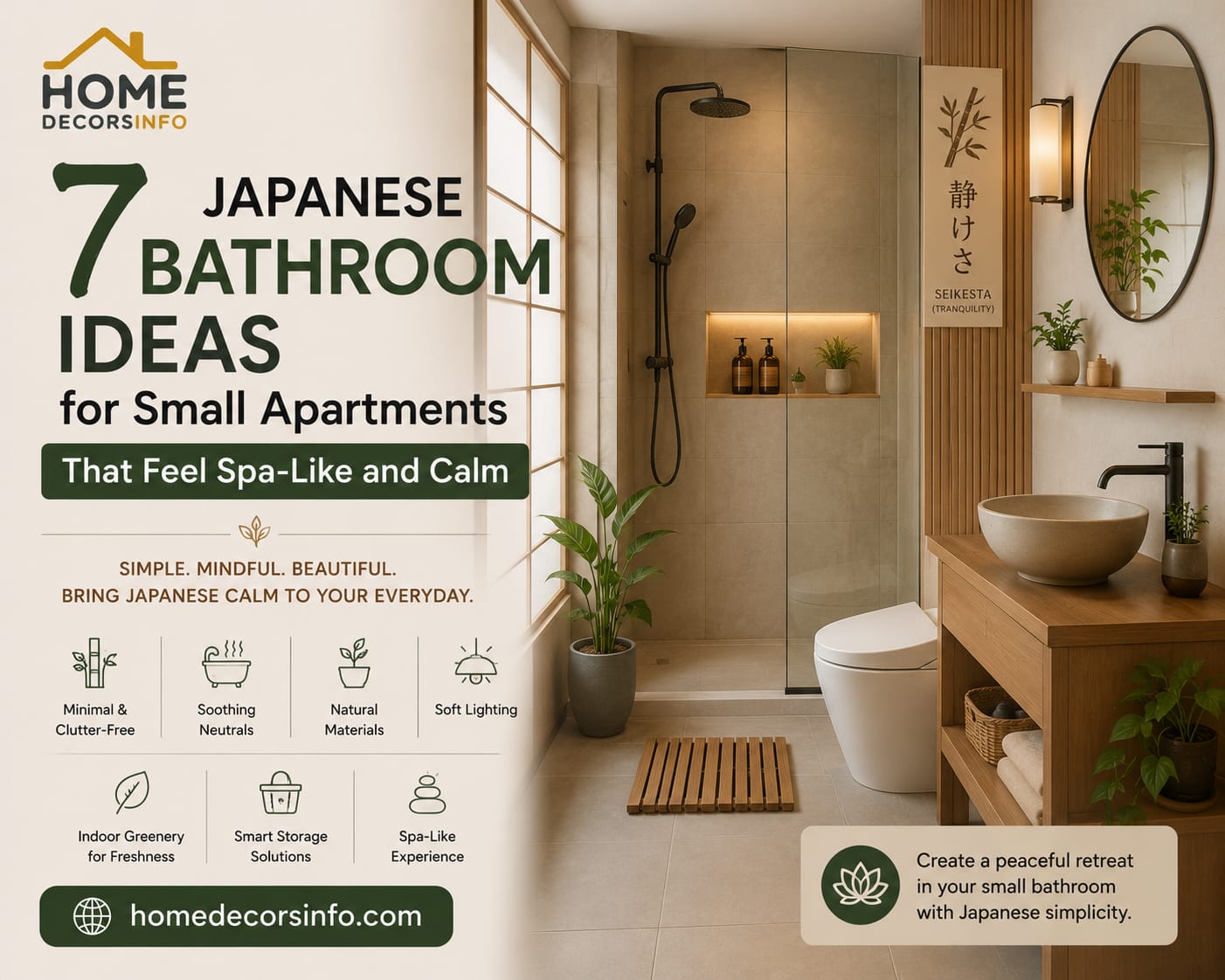
A bamboo or teak bath mat is one of the most impactful single additions you can make to a small Indian bathroom. It sits on the floor outside the shower or beside the sink, brings immediate warmth and natural beauty to what is usually the most neglected surface in the room, and is entirely practical — the slatted design allows water to drain through and the surface dries quickly, making it more hygienic than cloth bath mats in the humid Indian bathroom environment.
Bamboo bath mats are available on Amazon India and Pepperfry in sizes ranging from 40 cm × 60 cm to 50 cm × 80 cm, priced from ₹600 to ₹2,000 depending on size and quality. Teak versions are slightly more expensive but last longer and have a warmer, richer colour. Either material immediately gives the bathroom floor a visual anchor that makes the whole room feel more like a spa than a utility space.
3. Declutter Every Surface to the Absolute Minimum
Indian apartment bathrooms tend to accumulate objects rapidly — multiple shampoo bottles, conditioners, soaps, lotions, razors, combs, and various other items spread across every available surface. The Japanese approach is radical by comparison: the bathing and washing area should contain only what is in active daily use, and everything else should be stored out of sight.
Go through your bathroom and remove everything from all surfaces. Then put back only the items you use every single day. Everything else — backup bottles, rarely used products, items that belong in another room — should be stored in a cabinet or basket, not displayed on the counter.
For items that do need to be stored, a small wicker or rattan basket under the sink or inside a bathroom cabinet keeps them accessible without contributing to visual clutter. A narrow wooden shelf with two or three items on it — a soap dish, a small plant, one candle — is not just cleaner; it is genuinely more beautiful than the same shelf covered in products.
4. Add One Small Plant
Plants are an essential part of Japanese interior design, and bathrooms are an ideal location for specific plant varieties. The high humidity of an Indian bathroom — especially after hot showers — suits tropical plants that struggle in drier rooms elsewhere in the flat. A single small plant on a bathroom shelf or windowsill adds colour, life, and a quality of natural calm that is the hallmark of Japanese-inspired spaces.
The best plants for Indian apartment bathrooms:
- Peace lily: Thrives in low light and high humidity — ideal for bathrooms with small or high windows
- Pothos (money plant): Trailing from a shelf or small hanging planter, handles humidity and low light equally well
- Spider plant: Does well in bright indirect light and high humidity
- Bamboo (lucky bamboo in water): Very traditional in Japanese aesthetic, grows in a small vase of water with no soil needed
- Aloe vera: Practical as well as decorative — the gel is useful for skin care and hair, suiting the bathroom context perfectly
One plant, well chosen and placed with intention, is sufficient. A bathroom with seven plants looks like a greenhouse. A bathroom with one beautiful plant in a simple ceramic pot looks designed.
5. Upgrade the Lighting to Warm and Layered
Bathroom lighting in most Indian flats is a single cool or neutral white overhead fitting — practical for seeing what you are doing but not remotely pleasant as an environment to be in. Japanese bathroom design uses warm, softer light that makes the space feel calm and restorative rather than clinical and stark.
The simplest upgrade is switching the bathroom bulb to a warm white LED (2700K to 3000K colour temperature). This one change — costing ₹80 to ₹150 — makes a significant immediate difference to how the room feels, particularly in the morning and evening when the light is on. Warm light is gentler on the eyes, more flattering on the skin, and signals to the body that the bathroom is a place of relaxation rather than examination.
If your bathroom has a mirror with lighting, replacing cold white strip lights with warm white equivalents makes an even bigger difference. For a more significant upgrade, a small waterproof wall light fixture (IP44 rated for bathroom use) in a warm tone on a dimmer switch transforms the evening bathing experience completely — available from ₹800 to ₹3,000 at electrical shops and on Amazon India.
6. Use White or Neutral Textiles Throughout
Towels, bath mats, and any fabric elements in the bathroom should be unified in colour for a Japanese-inspired look. White, off-white, warm beige, or soft grey — all in the same neutral family — create the clean, cohesive quality that is characteristic of Japanese bathroom design. Mixed colours and patterns in the bathroom create visual noise that prevents the room from feeling calm.
Good quality white cotton towels are widely available in India — Trident, Welspun, and D’Décor all produce good quality cotton bath towels available on Amazon India and in most home linen stores for ₹300 to ₹800 per towel. A matching set of two or three towels in white or warm white, hung on a simple wooden or brushed metal hook rather than a towel rail piled with multiple colours, looks dramatically more calm and considered.
A single white or cream cotton bath rug on the floor (alongside or instead of the bamboo mat, depending on preference) ties the textile palette together. Keep the colour consistent and the materials natural — cotton, linen, or bamboo rather than synthetic microfibre — for the most cohesive result.
7. Create a Small Ritual Corner
One of the most distinctly Japanese ideas you can bring into a small apartment bathroom is the concept of a ritual corner — a small, designated area of the bathroom that is devoted to a specific calming practice. This could be as simple as a small wooden tray on the bathroom counter that holds only your morning skincare items in a considered arrangement. Or a small shelf at eye level with a single candle, a tiny plant, and a smooth stone — items with no functional purpose beyond making the space feel intentional and personal.
In Japanese culture, the idea of ritual — performing everyday acts with full attention and care — is deeply connected to the feeling of calm at home. A bathroom ritual corner does not need to be elaborate or expensive. It is simply a small area of the room that has been designed for how it makes you feel rather than purely for function. A bamboo tray (₹150 to ₹400), two or three items you love, and the discipline to keep that tray clear of everything else is all it takes.
For the broader principles of daily intentional habits that support this kind of calm home environment, daily minimalist habits that make your home feel more peaceful is a worthwhile companion read. And for ideas on bringing plants into other small spaces around the home, minimalist plant decor ideas for small spaces covers a full range of simple, low-cost approaches.
Budget Guide: Japanese Bathroom Transformation in India
| Item | Approx. Cost | Where to Buy | Impact |
|---|---|---|---|
| Warm white LED bulb | ₹80–₹150 | Local electrical shop, Amazon India | Very high — immediate atmosphere change |
| Bamboo / teak bath mat | ₹600–₹1,800 | Amazon India, Pepperfry | High — visual anchor for the room |
| Bamboo accessory set (soap dish, holder) | ₹400–₹800 | Amazon India, Ikea India | High — removes plastic visual noise |
| White cotton towel set | ₹600–₹1,600 | Amazon India, Home Centre | Medium-high — unifies textile palette |
| Small plant + ceramic pot | ₹150–₹400 | Local nursery | High — adds life and natural calm |
| Bamboo tray (ritual corner) | ₹150–₹400 | Ikea India, Amazon India | Medium — adds intentionality |
| Total (complete transformation) | ₹1,980–₹5,150 | — | — |
A complete transformation of a small Indian apartment bathroom following these seven ideas costs between ₹2,000 and ₹5,000 — less than most people spend on a single piece of decorative furniture. And the effect on how the room feels every single morning is entirely disproportionate to that cost.
What to Remove From Your Bathroom Before Adding Anything
The most important step in a Japanese bathroom transformation is not what you add — it is what you take away. Before buying a single item, remove these from your bathroom:
- Every plastic accessory you are replacing with a natural material equivalent
- All bottles and products not in active daily use — store them elsewhere
- Multiple towels in different colours — keep only a unified set in neutral tones
- Any decorative items that are collecting dust rather than contributing to calm
- The bath rug with a busy pattern — replace with a plain neutral or the bamboo mat
- Anything stored on top of the toilet tank that does not absolutely belong there
In most Indian apartment bathrooms, this removal process alone — before any purchases — produces a noticeably cleaner, calmer space. The additions that follow simply build on that foundation.
Dealing With Small Indian Bathroom Challenges
No Natural Light
Many Indian apartment bathrooms have no window at all — just ventilation. In this case, warm artificial lighting becomes even more important. A warm white bulb as close to 2700K as possible, combined with a small mirror that reflects and amplifies what light there is, creates the warmest possible result. For plants, choose species that tolerate very low light — peace lily and pothos are the best options for windowless bathrooms.
Very Limited Space
In truly tiny Indian bathrooms (under 30 square feet), vertical space becomes essential. A small wall-mounted wooden shelf above the toilet or beside the mirror — holding only two or three items — adds storage without occupying floor space. The bamboo bath mat, a single plant, and unified towel colours do the most work in a very small space because they change the quality of what is already there rather than adding new elements.
In homes where a bathroom is shared by multiple family members, the decluttering and natural materials approach still applies — the difference is that everyone’s daily items need storage space. A small bamboo organiser with individual sections, or a set of small ceramic containers each designated to one person’s daily essentials, keeps the surfaces clear while accommodating everyone’s practical needs.
Conclusion
A Japanese-inspired bathroom does not require renovation, new tiles, or significant expenditure. It requires a different philosophy — one that treats the bathroom as a place worth caring about, a space where intentional simplicity creates genuine calm every time you use it. Start with the warm bulb this week. Add the bamboo mat next. Remove the plastic accessories over the following weeks and replace them gradually. Each small change compounds into a room that feels entirely different from where you started — and entirely more pleasant to begin and end your day in.
For more ideas on Japanese-inspired design applied across the whole home, Japandi vs Japanese decor for small apartments gives a helpful overview of the two related styles and how to choose the right approach for your space.
Frequently Asked Questions
Can I apply Japanese bathroom design in a rented Indian apartment?
Yes — all seven ideas in this guide are fully applicable in a rented apartment without any permanent changes. Replacing accessories, adding a bamboo mat, changing the light bulb, adding a plant, and unifying the towel colours are all completely reversible changes that leave no marks on the property. The only idea that might require landlord permission is adding a wall-mounted shelf, and even that can be done with adhesive shelf brackets rather than drilled fixings in most cases.
Which plants are best for a dark Indian bathroom with no window?
Peace lily and pothos (money plant) are the two most reliable choices for a windowless Indian bathroom. Both tolerate very low light and thrive in the high humidity of a bathroom environment. Lucky bamboo grown in water is another excellent option — it requires no soil, minimal light, and has a distinctly Japanese aesthetic quality. Avoid succulents and herbs in windowless bathrooms — they need light to survive and will decline quickly without it.
How do I prevent the bamboo bath mat from getting mouldy?
Stand the bamboo mat upright against the wall or hang it after bathing to allow it to dry fully on both sides. Wipe down with a diluted white vinegar solution (1 part vinegar to 3 parts water) once a week to prevent mould and mildew buildup. In very humid Indian monsoon conditions, keeping the bathroom well-ventilated — exhaust fan on for 15 minutes after showering — also significantly reduces moisture accumulation on all bathroom surfaces including the mat.
Is Japanese bathroom design practical for a busy Indian family?
The core principle — keeping surfaces clear, using natural materials, and maintaining warm calm lig